Casuarina stricta
Aiton
Drooping sheoak, Mountain oak

(c) deborod, some rights reserved (CC BY-NC)

(c) deborod, some rights reserved (CC BY-NC)

(c) deborod, some rights reserved (CC BY-NC)
What to Eat
Edible parts: Seeds
The seeds are edible.
Where to Find It
It grows near the coast and can tolerate salty winds and salty soils. Plants are not affected by frost. The variety spectabilis occurs in northern Tasmania.
Asia, Australia*, Indonesia, SE Asia, Tasmania,
How to Identify
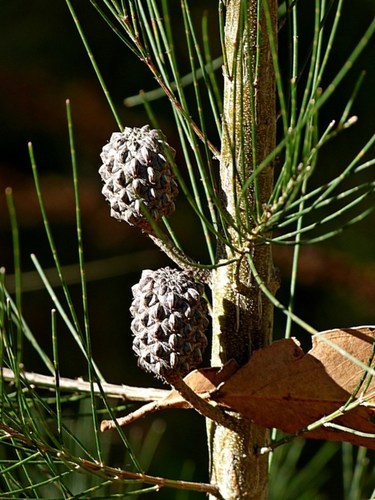
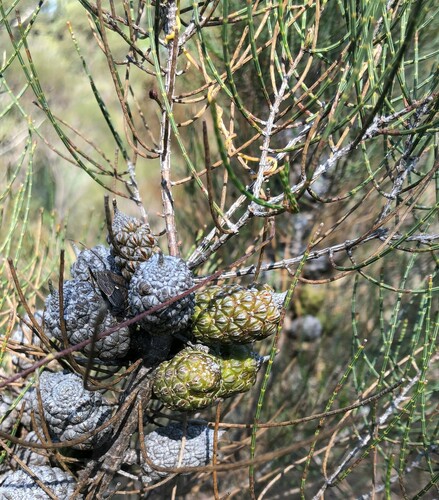
A small spreading tree. It grows 4-11 m high and spreads 3-6 m wide. The trunk is tall and erect. The branches droop. The small branches are dark green and have prominent ridges. There are 9-12 leaf teeth. These are sharply pointed. The male flowers are in spikes. These are at the ends of side branches. They are 8-12 cm long. The cones are 2-4.5 cm long by 2-3 cm wide. They have sharply pointed valves.
How to Grow
Plants are grown from seed.
Notes
There are about 17 Casuarina species.
Names & Synonyms
References (7)
- Greig, D., 1996, Flowering Natives for Home Gardens. Angus & Robertson. p 114
- Hort. kew. 3:320. 1789
- Kirkpatrick, J.B. & Backhouse, S., 1985, Native Trees of Tasmania. p 63
- Leiper, G & Houser, J., Mutooroo. Plant Use by Australian Aboriginal People. Assembly press, Queensland.
- Lord, E.E., & Willis, J.H., 1999, Shrubs and Trees for Australian gardens. Lothian. p 14
- Morley, B.D., & Toelken, H.R., (Eds), 1983, Flowering Plants in Australia. Rigby. p 66
- Sukarya, D. G., (Ed.) 2013, 3,500 Plant Species of the Botanic Gardens of Indonesia. LIPI p 186