Areca vestiaria
Giseke
Orange crown shaft palm

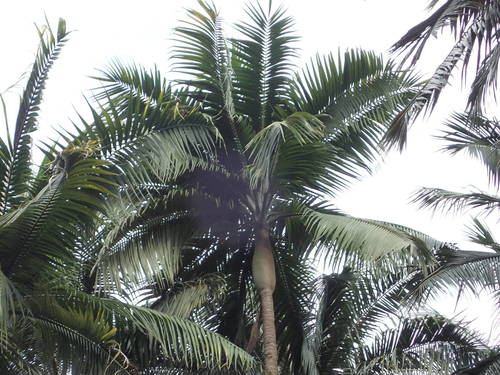
(c) Malcolm Manners, some rights reserved (CC BY)

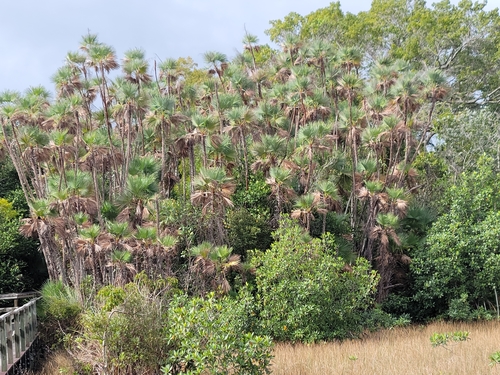
(c) Dick Culbert, some rights reserved (CC BY)

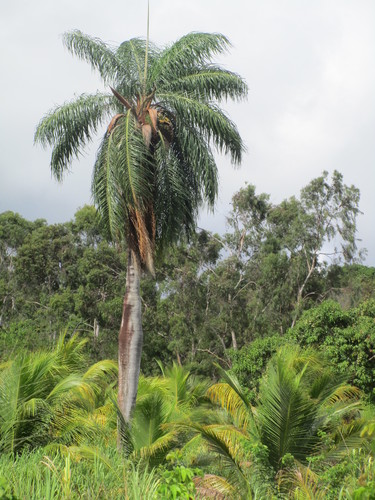
(c) Marcio Santos Ferreira, some rights reserved (CC BY-NC), uploaded by Marcio Santos Ferreira
What to Eat
Edible parts: Fruit, Nut - masticatory
The fruit is eaten; the nuts are used as a masticatory.
Where to Find It
It is a tropical plant. It grows in rainforests in the lowlands and up to 1,200 m above sea level. It suits hardiness zones 9-11. Cairns BG.
Asia, Australia, Indonesia*, Malaysia, SE Asia,
How to Identify
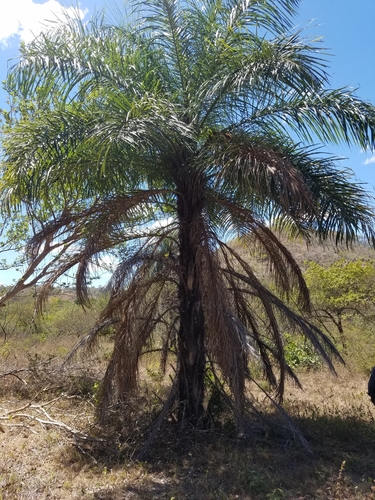
A palm. It has a single smooth trunk but can be in clusters. This is 7 m tall and 10 cm across. The leaf stalks are bright orange. The leaves are dark green. The fronds are 1.3 m long and have 20-30 leaflets. Flowers are in clusters and are orange-yellow. They are on short stalks amongst the leaves.
How to Grow
Plants can be grown from seeds or suckers.
Wikipedia
Source ↗Areca vestiaria (pinang yaki or pinang merah) is a species of palm native to the rainforests of eastern Indonesia especially North Sulawesi. Its morphology is more diverse than other species of palms, and in particular the color of its upper trunk / crownshaft changes depending on altitude (varying between red and orange). The people of Sulawesi, near Bogani Nani Wartabone National Park, have long used the fruit of this palm as a male contraceptive. They drink a decoction of the fruit flesh boiled in water. The chemical composition of the fruit has been investigated with this in mind, but this does not represent evidence of its effectiveness as an antifertility agent.
Production
It is slow growing.
Names & Synonyms
Pinang yaki, Yaki palm
References (2)
- Heatubun, C. D. et al, 2012, A monograph of the betel nut palms (Areca: Arecaceae) of East Malesia. Botanical Journal of the Linnean Society, 2012, 168, 147–173
- Sukarya, D. G., (Ed.) 2013, 3,500 Plant Species of the Botanic Gardens of Indonesia. LIPI p 750