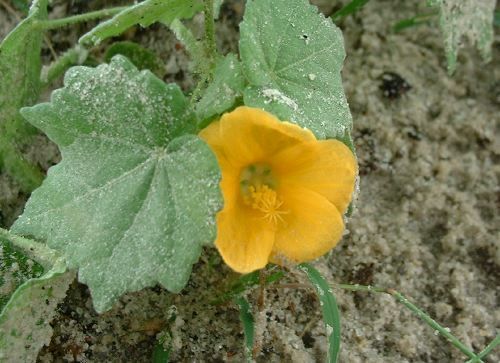
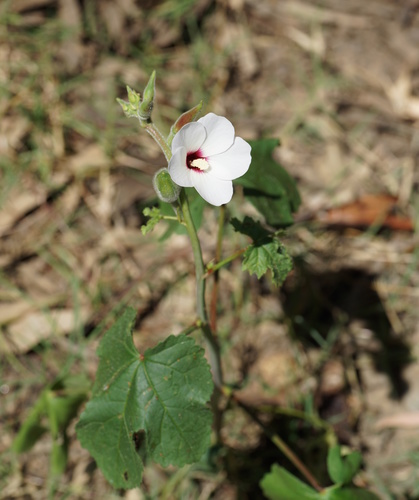
Ceiba acuminata
(S. Watson) Rose

iNaturalist · cc-by-nc-sa
(c) Rich Hoyer, some rights reserved (CC BY-NC-SA)
(c) Rich Hoyer, some rights reserved (CC BY-NC-SA)

iNaturalist · cc-by-nc-sa
(c) Rich Hoyer, some rights reserved (CC BY-NC-SA)
(c) Rich Hoyer, some rights reserved (CC BY-NC-SA)

iNaturalist · cc-by-nc-sa
(c) Rich Hoyer, some rights reserved (CC BY-NC-SA)
(c) Rich Hoyer, some rights reserved (CC BY-NC-SA)
What to Eat
Edible parts: Seeds, Roots, Bark - tea
The seeds are rich in oil and are eaten. The tuberous roots are harvested and roasted. Bark can be made into tea.
Where to Find It
A tropical plant.
Central America, Cuba, Mexico, North America, West Indies,
Countries: Antigua & Barbuda, Barbados, Bahamas, Belize, Canada, Costa Rica, Cuba, Dominica, Dominican Republic, Grenada, Guatemala, Honduras, Haiti, Jamaica, St Kitts & Nevis, St Lucia, Mexico, Nicaragua, Panama, Puerto Rico, El Salvador, Trinidad & Tobago, United States, St Vincent
How to Identify
A tree. It grows 10 m high. It has a dense rounded crown. The leaves are divided like fingers. The flowers are small and have curling strap-like petals. The stamens are deep ink. The flowers are about 10 cm across.
Production
It is slow growing.
Notes
There are 4 Ceiba species. Also put in the family Bombacaceae. In the subfamily Bombacoideae.
References (5)
- Barwick, M., 2004, Tropical and Subtropical Trees. A Worldwide Encyclopedic Guide. Thames and Hudson p 105
- Contr. U.S. Natl. Herb. 8:320. 1905
- Grandtner, M. M., 2008, World Dictionary of Trees. Wood and Forest Science Department. Laval University, Quebec, Qc Canada. (Internet database http://www.WDT.QC.ca)
- Nabhan, G.P. & Felger, R.S., Wild desert relatives of crops: their direct uses as food in Wickens, G.E., Goodin, J.R., and Field, D.V.,(Eds.) 1985, Plants for Arid Lands. Unwin Hyman, London, p 25
- Yetman, D., 2002, The Guarijios of the Sierra Madre: Hidden People of Northwestern Mexico. University of New Mexico Press. p 184