Centaurium erythraea
Rafn
Common centaurium, European centaury

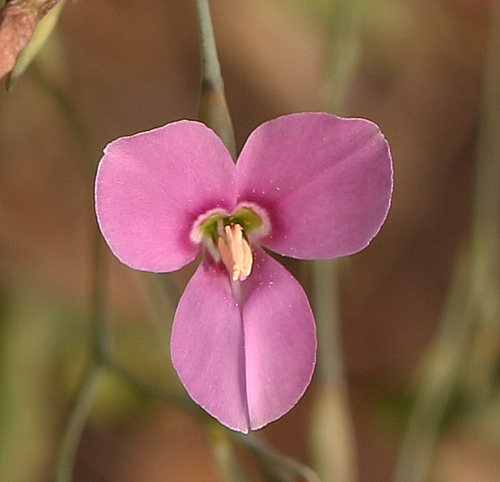
(c) Harry Podschwit, some rights reserved (CC BY), uploaded by Harry Podschwit

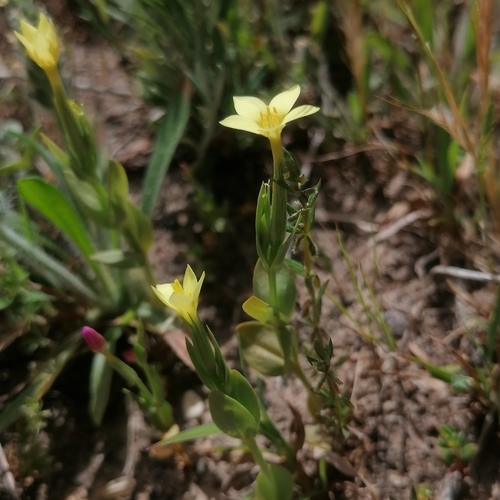
(c) Hans Hillewaert, some rights reserved (CC BY-NC-SA), uploaded by Hans Hillewaert
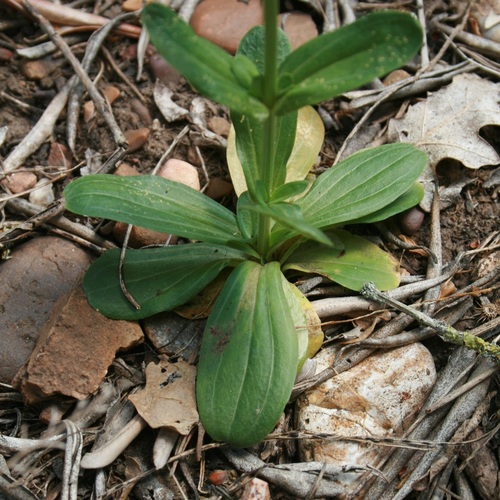
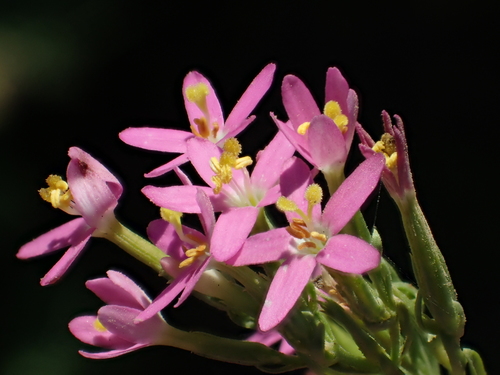
(c) mick_photo, some rights reserved (CC BY-NC), uploaded by mick_photo
What to Eat
Edible parts: Leaves - flavouring, Flowers - tea,Spice, Leaves - tea
The plant is used as a flavouring in bitter herbal liqueurs and is an ingredient of vermouth.
Known Hazards
Where to Find It
It is a temperate or Mediterranean plant. It grows up to 1,400 m above sea level.
Africa, Asia, Australia, Balkans, Brazil, Bulgaria, Central America, Central Asia, Costa Rica, Estonia, Europe, Hungary, Ireland, Italy, Lithuania, Luxembourg, Mediterranean, North Africa, North America, Romania, Russia, Sicily, Slovenia, South America, Spain, Tajikistan, Tasmania, Ukraine,
How to Identify
A herb. It grows for one or two years. It grows 15-50 cm tall. The leaves are in a ring at the base. The leaves at the base are oval to sword shaped and 3-4 cm long by 1-2 cm wide. The leaves on the stem are 1-3 cm long and 5-15 mm wide. These do not have stalks and get smaller up the stem. The flowers are small and pink and tube shaped and like stars. The fruit is a capsule 7-9 mm long.
How to Grow
Prefers a well-drained sandy loam with some peat and a sunny position. It avoids wet or rich soils. Plants are not easy to grow in a garden. The flowers only open in fine weather and close at midday. Although the growing plant is scentless, if the cut stems are immersed in warm water for 24 hours a most penetrating odour will be observed on distillation. A very variable plant, some botanists divide it into a number of separate species.
Propagation: Sow seed February to May in situ, or as soon as it is ripe in situ. Germination is usually rapid.
Medicinal Uses
One of the most useful bitter herbs, centaury strengthens digestive function, especially within the stomach. By increasing stomach secretions it hastens the breakdown of food, stimulates the appetite and increases bile production. The plant needs to be taken over a number of weeks, and an infusion should be slowly sipped so that its components — detectable at a dilution of 1:3,500 — can stimulate reflex activity throughout the upper digestive tract. The whole herb is appetizer, aromatic, bitter, cholagogue, diaphoretic, digestive, emetic, weakly febrifuge, hepatic, stomachic and tonic. It acts on the liver and kidneys, purifies the blood and is an excellent tonic for the digestive system. Externally, the fresh green herb is said to be a good application to wounds and sores. It is often combined with camomile (Chamaemelum nobile), meadowsweet (Filipendula ulmaria) and marshmallow (Althaea officinalis). The whole plant is harvested in flower and can be dried for later use. It is used in Bach flower remedies — the keywords for prescribing it are 'Weak willed', 'Too easily influenced' and 'Willing servitors'. A homeopathic remedy made from the plant is used in the treatment of liver and gall bladder ailments. The German Commission E Monographs approve Centaurium erythraea for dyspeptic complaints and loss of appetite.
Other Uses
A long-lasting bright yellowish-green dye is obtained from the flowers.
Wikipedia
Source ↗Centaurium erythraea is a species of flowering plant in the gentian family known by the names common centaury and European centaury. It is also commonly known as feverfoullie, gentian or centaury.
Other Information
It is sold in local markets.
Names & Synonyms
Centaura, Cintoria, Ezerfu, Hierba amargosa, Kirmizi kantaron, Maasapp, Navadna tavžentroža, Poldhumalad
References (12)
- Bonet, M. A. & Valles, J., 2002, Use of non-crop food vascular plants in Montseny biosphere reserve (Catalonia, Iberian Peninsula). International Journal of Food Sciences and Nutrition (2002) 53, 225–248
- Denes, A., et al, 2012, Wild plants used for food by Hungarian ethnic groups living in the Carpathian Basin. Acta Societatis Botanicorum Poloniae 81 (4): 381-396
- Dogan, Y., & Nedelcheva, A., 2015, Wild plants from open markets on both sides of the Bulgarian-Turkish border. Indian Journal of Traditional Knowledge. Vol. 14(3): 351-358
- Kalle, R. & Soukand, R., 2012, Historical ethnobotanical review of wild edible plants of Estonia (1770s-1960s) Acta Societatis Botanicorum Poloniae 81(4):271-281
- Luczaj, L., et al, 2015, Wild food plants and fungi used by Ukrainians in the western part of the Maramureş region in Romania. Acta Soc Bot Pol 84(3):339–346
- Pasta, S., et al, 2020, An Updated Checklist of the Sicilian Native Edible Plants: Preserving the Traditional Ecological Knowledge of Century-Old Agro-Pastoral Landscapes. Frontiers in Plant Science. Volume 11|Article 388
- Pieroni, A. & Soukand, R., 2018, Forest as Stronghold of Local Ecological Practice: Currently Used Wild Food Plants in Polesia, Northern Ukraine. Economic Botany, XX(X) pp. 1-21
- Seidemann J., 2005, World Spice Plants. Economic Usage, Botany, Taxonomy. Springer. p 91
- Shikov, A. N. et al, 2017, Traditional and Current Food Use of Wild Plants Listed in the Russian Pharmacopoeia. Frontiers in Pharmacology. Vol. 8 Article 841
- Tardio, J., et al, Ethnobotanical review of wild edible plants in Spain. Botanical J. Linnean Soc. 152 (2006), 27-71
- Wiersema, J. H. & Leon, B., 2013, World Economic Plants. A Standard Reference CRC Press. 2nd Ed. p 159
- World Checklist of Useful Plant Species 2020. Royal Botanic Gardens, Kew