Canscora diffusa
(Vahl) R. Br. ex Roem. & Schult.
(c) Shriram Bhakare, some rights reserved (CC BY-NC), uploaded by Shriram Bhakare
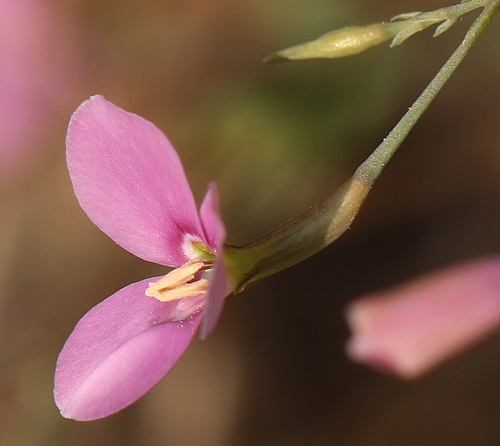
(c) Shriram Bhakare, some rights reserved (CC BY-NC), uploaded by Shriram Bhakare
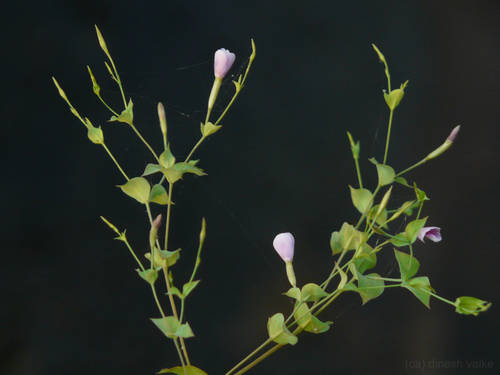
(c) Dinesh Valke, some rights reserved (CC BY-SA)
What to Eat
Edible parts: Leaves, Plant
The leaves and whole plant are eaten as a vegetable.
Where to Find It
It is a tropical plant.
Africa, Andaman Is., Asia, Australia, Bangladesh, Benin, Burkina Faso, Cameroon, Central Africa, Central African Republic, CAR, Chad, China, Congo DR, Congo R, Ethiopia, Ghana, Guinea, Guinea-Bissau, Himalayas, India, Indonesia, Ivory Coast, Laos, Liberia, Madagascar, Malawi, Mali, Mozambique, Myanmar, Nepal, New Caledonia, Nigeria, Northeastern India, Pacific, Philippines, Senegal, Sierra Leone, Sri Lanka, Sudan, Tanzania, Thailand, Vietnam, Zambia, Zimbabwe,
How to Identify
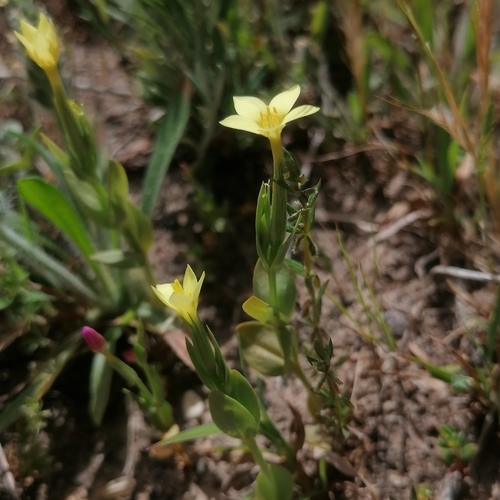
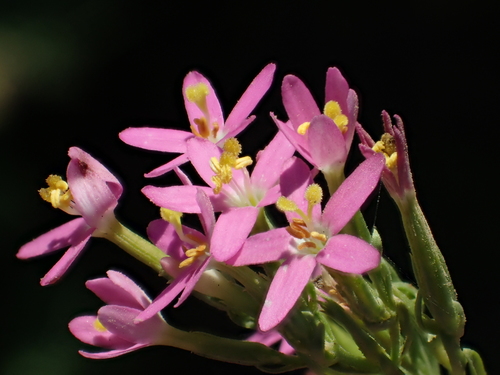
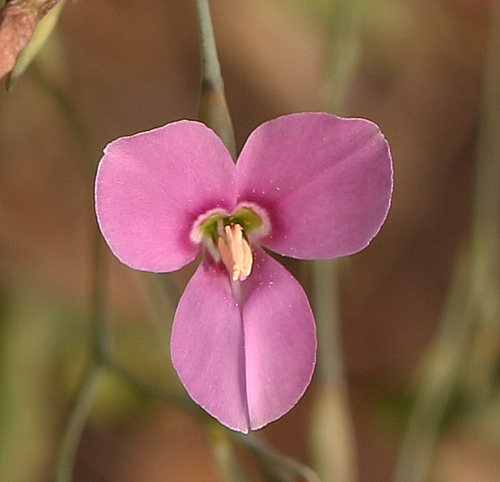
A herb. It is erect and grows each year from seed. It grows 35-70 cm tall. The stem is slender and 4 angled. The lower leaves have short stalks and the upper leaves do not have stalks. The leaves are 1-3 cm long by 0.5-1.5 cm wide. They are narrowly oval and wedge shaped at the base. There are many pink or white flowers.
Wikipedia
Source ↗Canscora diffusa is a plant species in the genus Canscora. Diffutidin and diffutin are flavans, a type of flavonoid, found in C. diffusa.
Names & Synonyms
Khakhabhaji
References (2)
- Ekka, N. S. & Ekka, A., 2016, Wild Edible plants Used by Tribals of North-east Chhattisgarh (Part-I), India. Research Journal of Recent Sciences. Vol. 5(ISC-2015), 127-131 (2016)
- Kew Plants of the World Online