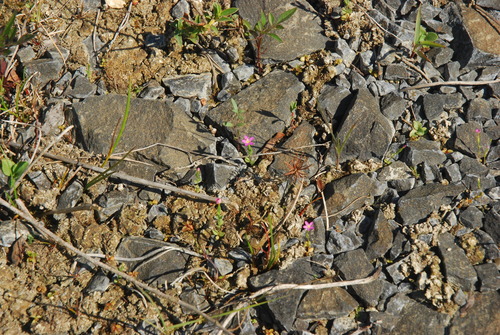
Centaurium pulchellum
(Sw.) Druce
iNaturalist · cc0
no rights reserved, uploaded by 葉子
no rights reserved, uploaded by 葉子
iNaturalist · cc-by-nc
(c) Alexander Baransky, some rights reserved (CC BY-NC)
(c) Alexander Baransky, some rights reserved (CC BY-NC)
What to Eat
Edible parts: Leaves - spice
The leaves are used to flavour drinks.
Where to Find It
It is a temperate plant.
Asia, Europe, Luxembourg, Mongolia, Russia, Spain,
Countries: Andorra, United Arab Emirates, Afghanistan, Albania, Armenia, Austria, Azerbaijan, Bosnia & Herzegovina, Bangladesh, Belgium, Bulgaria, Bahrain, Brunei, Bhutan, Belarus, Switzerland, China, Cyprus, Czechia, Germany, Denmark, Estonia, Spain, Finland, France, United Kingdom, Georgia, Greece, Croatia, Hungary, Indonesia, Ireland, Israel, India, Iraq, Iran, Iceland, Italy, Jordan, Japan, Kyrgyzstan, Cambodia, North Korea, South Korea, Kuwait, Kazakhstan, Laos, Lebanon, Liechtenstein, Sri Lanka, Lithuania, Luxembourg, Latvia, Monaco, Moldova, Montenegro, North Macedonia, Myanmar, Mongolia, Malta, Maldives, Malaysia, Netherlands, Norway, Nepal, Oman, Philippines, Pakistan, Poland, Portugal, Qatar, Romania, Serbia, Russia, Saudi Arabia, Sweden, Singapore, Slovenia, Slovakia, San Marino, Syria, Thailand, Tajikistan, Timor-Leste, Turkmenistan, Turkey, Taiwan, Ukraine, Uzbekistan, Vietnam, Yemen
How to Identify
A temperate herb in the Gentianaceae family.
Wikipedia
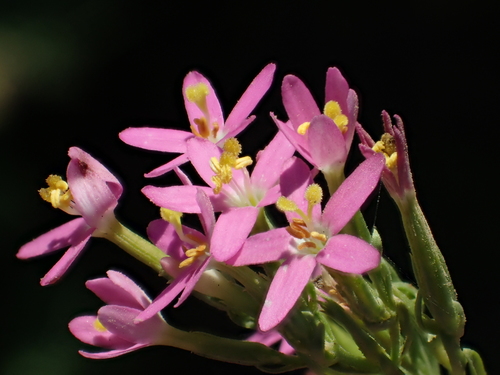
Source ↗Centaurium pulchellum is a species of flowering plant in the gentian family known by the common name lesser centaury, or slender centaury. It differs from Centaurium erythraea by lacking basal rosette of leaves and by having a developed peduncle below the flowers. It is often much smaller, less than ten centimetres. It is native to the southern temperate parts of Europe.
Names & Synonyms
Centaurium anatolicum (K. Koch) Tzvelevand others
References (3)
- Blanco-Salas, J., et al, 2019, Wild Plants Potentially Used in Human Food in the Protected Area “Sierra Grande de Hornachos” of Extremadura (Spain). Sustainability 2019, 11, 456
- Shikov, A. N. et al, 2017, Traditional and Current Food Use of Wild Plants Listed in the Russian Pharmacopoeia. Frontiers in Pharmacology. Vol. 8 Article 841
- Urgamal, M., Oyuntsetseg, B., Nyambayar, D. & Dulamsuren, Ch. 2014. Conspectus of the vascular plants of Mongolia. (Editors: Sanchir, Ch. & Jamsran, Ts.). Ulaanbaatar, Mongolia. “Admon“ Press. 334pp. (p. 79-90).