Rhododendron simsii

Planch.

EricaceaeLeavesFlowers
Rhododendron simsii
iNaturalist · cc-by-nc
(c) H.T.Cheng, some rights reserved (CC BY-NC), uploaded by H.T.Cheng
Rhododendron simsii
iNaturalist · cc-by-nc
(c) Stargazer, some rights reserved (CC BY-NC)

What to Eat

Edible parts: Flowers, Vegetable

The flowers are cooked and eaten as a vegetable.

Where to Find It

It is a temperate to tropical plant. in China it grows in pine forests between 500-2,700 m above sea level. In Sichuan and Yunnan.

Asia, China, Indochina, Indonesia, Japan, Korea, Laos, Mynamar, SE Asia, Taiwan, Thailand, Tibet, Vietnam,

Countries: United Arab Emirates, Afghanistan, Armenia, Azerbaijan, Bangladesh, Bahrain, Brunei, Bhutan, China, Georgia, Indonesia, Israel, India, Iraq, Iran, Jordan, Japan, Kyrgyzstan, Cambodia, North Korea, South Korea, Kuwait, Kazakhstan, Laos, Lebanon, Sri Lanka, Myanmar, Mongolia, Maldives, Malaysia, Nepal, Oman, Philippines, Pakistan, Qatar, Saudi Arabia, Singapore, Syria, Thailand, Tajikistan, Timor-Leste, Turkmenistan, Turkey, Taiwan, Uzbekistan, Vietnam, Yemen

How to Identify

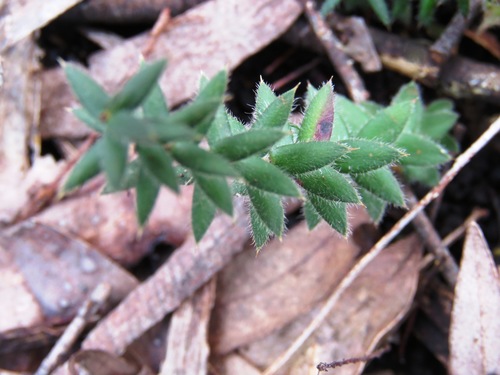
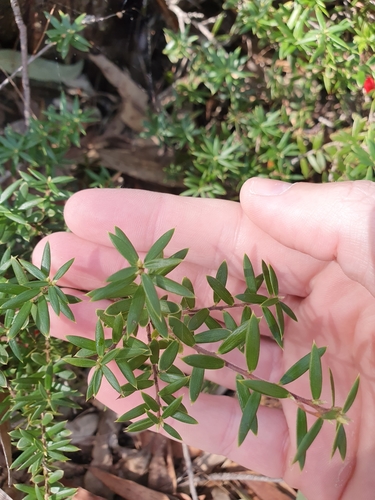
A shrub. It grows about 2 m tall. The summer and winter leaves are different. The leaves are oval and 2-5 cm long by 1-3 cm wide. The base is wedge shaped and the edges are rolled. There are fine teeth along the edge. The flowers are in groups of 2-3. They are funnel shaped and red, pink or with dark red flecks.

How to Grow

Plants can be grown from seeds.

Wikipedia

Source ↗

Rhododendron simsii (杜鵑) is a rhododendron species native to East Asia, where it grows at altitudes of 500–2,700 m (1,600–8,900 ft).

Names & Synonyms
Benvenuti, S. & Mazzoncini, M., 2021, The Biodiversity of Edible Flowers: Discovering New Tastes and New Health Benefits. Frontiers in Plant Science Article 569499. Kew Plants of the World Online Liu, Yi-tao, & Long, Chun-Lin, 2002, Studies on Edible Flowers Consumed by Ethnic Groups in Yunnan. Acta Botanica Yunnanica. 24(1):41-56 Sukarya, D. G., (Ed.) 2013, 3,500 Plant Species of the Botanic Gardens of Indonesia. LIPI p 703 Xu, You-Kai, et al, 2004, Wild Vegetable Resources and Market Survey in Xishuangbanna, Southwest China. Economic Botany. 58(4): 647-667.

More from Ericaceae