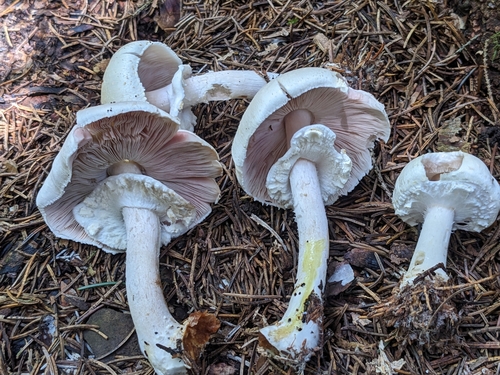
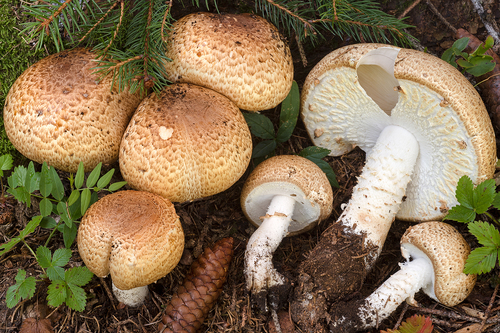
Agaricus placomyces
Peck
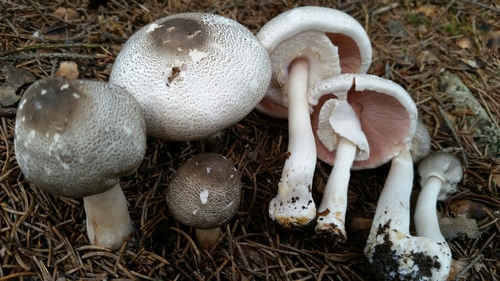
iNaturalist · cc-by-nc
(c) John Plischke, some rights reserved (CC BY-NC), uploaded by John Plischke
(c) John Plischke, some rights reserved (CC BY-NC), uploaded by John Plischke
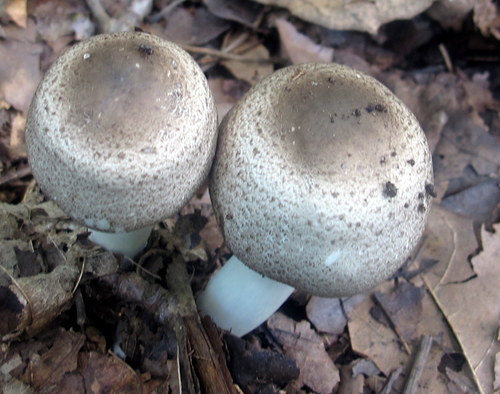
iNaturalist · cc-by-sa
(c) mycowalt, some rights reserved (CC BY-SA), uploaded by mycowalt
(c) mycowalt, some rights reserved (CC BY-SA), uploaded by mycowalt
What to Eat
Edible parts: Mushroom, Fungus, Caution
Known Hazards
Documented Toxic Effects
diarrheagastrointestinal disorderstomach crampsvomiting
Source: Encyclopedia of Life TraitBank. Toxicity often varies by plant part — consult the hazards section above for preparation-specific details.
Where to Find It
It is a temperate plant.
Asia, China, Hong Kong, Japan, Mexico, North America, Pakistan, Russia,
Countries: United Arab Emirates, Afghanistan, Antigua & Barbuda, Armenia, Azerbaijan, Barbados, Bangladesh, Bahrain, Brunei, Bahamas, Bhutan, Belize, Canada, China, Costa Rica, Cuba, Dominica, Dominican Republic, Grenada, Georgia, Guatemala, Honduras, Haiti, Indonesia, Israel, India, Iraq, Iran, Jamaica, Jordan, Japan, Kyrgyzstan, Cambodia, St Kitts & Nevis, North Korea, South Korea, Kuwait, Kazakhstan, Laos, Lebanon, St Lucia, Sri Lanka, Myanmar, Mongolia, Maldives, Mexico, Malaysia, Nicaragua, Nepal, Oman, Panama, Philippines, Pakistan, Puerto Rico, Qatar, Russia, Saudi Arabia, Singapore, El Salvador, Syria, Thailand, Tajikistan, Timor-Leste, Turkmenistan, Turkey, Trinidad & Tobago, Taiwan, United States, Uzbekistan, St Vincent, Vietnam, Yemen
How to Identify
A mushroom in the family Agaricaceae found in temperate regions.
Wikipedia
Source ↗Agaricus placomyces is a toxic basidiomycete fungus of the genus Agaricus. It is found in North America; the Eurasian populations formerly known by the same scientific name are nowadays known as A. moelleri, while the present species may also be referred to as A. praeclaresquamosus.
Names & Synonyms
Pollita
References (3)
- Boa, E. R., 2004, Wild edible fungi and their importance to people. FAO Non Wood Forest Products Booklet 17
- Estrada-Martinez, E., et al, 2009, Contribucion al conocimiento etnomicologico de los Hongos Comestibles Silvestres de Mercados Regionales y Comunidades de la Sierra Nevada (Mexico). Intercienca Jan 2009 Vol. 34 No. 1
- Imai, S., 1938, Studies on the Agaricaceae of Hokkaido. 2. Jour. Facul. Agr., Hokkaido Imp. Univ., Sapporo, Vol. XLIII, Pt. 2, August, 1938