Viscum triflorum
DC.

iNaturalist · cc-by-nc
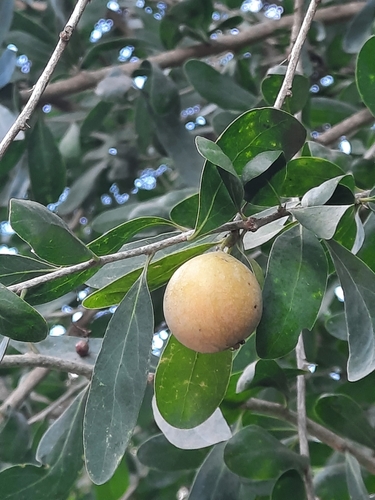
(c) Ricky Taylor, some rights reserved (CC BY-NC), uploaded by Ricky Taylor
(c) Ricky Taylor, some rights reserved (CC BY-NC), uploaded by Ricky Taylor

iNaturalist · cc-by-nc
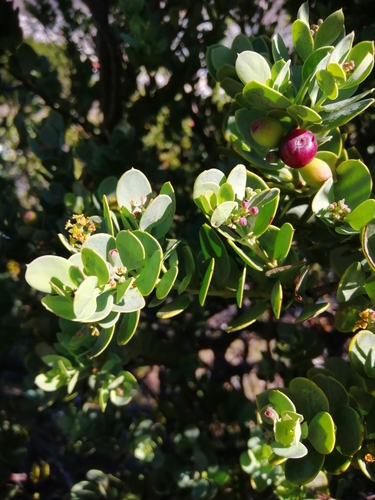
(c) Jean-Philippe BASUYAUX, some rights reserved (CC BY-NC)
(c) Jean-Philippe BASUYAUX, some rights reserved (CC BY-NC)
What to Eat
Edible parts: Fruit
The fruit is eaten.
Known Hazards
Where to Find It
It is a tropical plant. It grows from sea level to 2,350 m above sea level.
Africa, Central Africa, Comoros, Congo DR, Djibouti, East Africa, Eswatini, Ethiopia, Kenya, Reunion, Sao Tome and Principe, Seychelles, Swaziland, Tanzania, Zambia, Zimbabwe,
Countries: Angola, Burkina Faso, Burundi, Benin, Botswana, Congo (DRC), Central African Republic, Congo (Republic), Cote d'Ivoire, Cameroon, Cape Verde, Djibouti, Algeria, Egypt, Eritrea, Ethiopia, Gabon, Ghana, Gambia, Guinea, Equatorial Guinea, Guinea-Bissau, Kenya, Comoros, Liberia, Lesotho, Libya, Morocco, Madagascar, Mali, Mauritania, Mauritius, Malawi, Mozambique, Namibia, Niger, Nigeria, Reunion, Rwanda, Seychelles, Sudan, Sierra Leone, Senegal, Somalia, South Sudan, Sao Tome & Principe, Eswatini, Chad, Togo, Tunisia, Tanzania, Uganda, South Africa, Zambia, Zimbabwe
How to Identify
A mistletoe parasite that grows on other plants. It forms round clusters 30-50 cm tall. Young branches are slightly flattened and has 6 ribs. The leaves are variable.
Notes
It has also been put in the family Viscaceae.
Names & Synonyms
Narudenyei
Viscum comorense LecomteViscum venosum DC.Viscum venosum var. lanceolatum DC.
References (1)
- Bussman, R. W., 2006, Ethnobotanyof the Samburu of Mt Nyiru, South Turkana, Kenya. Journal of Ethnobiology and Ethnomedicine. 2:35