Viscum tuberculatum
A. Rich.
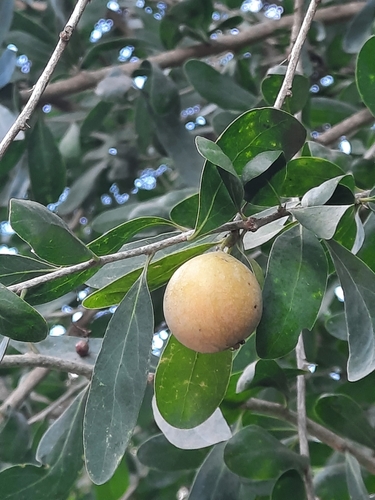
SantalaceaeFruit

iNaturalist · cc-by-nc
(c) Mike Plagens, some rights reserved (CC BY-NC), uploaded by Mike Plagens
(c) Mike Plagens, some rights reserved (CC BY-NC), uploaded by Mike Plagens

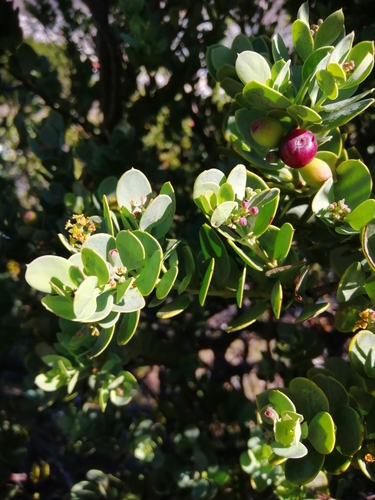
iNaturalist · cc-by-nc
(c) Troos van der Merwe, some rights reserved (CC BY-NC)
(c) Troos van der Merwe, some rights reserved (CC BY-NC)
What to Eat
Edible parts: Fruit
The fruit are edible.
Where to Find It
It is a tropical plant. It grows in dry woodland. It is a parasite. It grows in a range of hosts. It is mostly between 1,200-2,500 m above sea level.
Africa, Angola, Central Africa, East Africa, Kenya, Namibia, Southern Africa,
Countries: Angola, Burkina Faso, Burundi, Benin, Botswana, Congo (DRC), Central African Republic, Congo (Republic), Cote d'Ivoire, Cameroon, Cape Verde, Djibouti, Algeria, Egypt, Eritrea, Ethiopia, Gabon, Ghana, Gambia, Guinea, Equatorial Guinea, Guinea-Bissau, Kenya, Comoros, Liberia, Lesotho, Libya, Morocco, Madagascar, Mali, Mauritania, Mauritius, Malawi, Mozambique, Namibia, Niger, Nigeria, Rwanda, Seychelles, Sudan, Sierra Leone, Senegal, Somalia, South Sudan, Sao Tome & Principe, Eswatini, Chad, Togo, Tunisia, Tanzania, Uganda, South Africa, Zambia, Zimbabwe
How to Identify
A shrub. It is rounded and grows up to 1 m tall. It keeps growing from year to year. The leaves are pale yellow to dark green. The leaves can be spoon shaped or wedge shaped. They are variable.
Notes
It has also been put in the family Viscaceae.
Names & Synonyms
Narudenyei
Viscum spragueanum Burtt DavyViscum tarchonanthum Welw. ex TieghViscum camporum Engl. & K. KrauseViscum holstii Engl.Viscum stuhlmannii Engl.
References (1)
- Bussman, R. W., 2006, Ethnobotanyof the Samburu of Mt Nyiru, South Turkana, Kenya. Journal of Ethnobiology and Ethnomedicine. 2:35