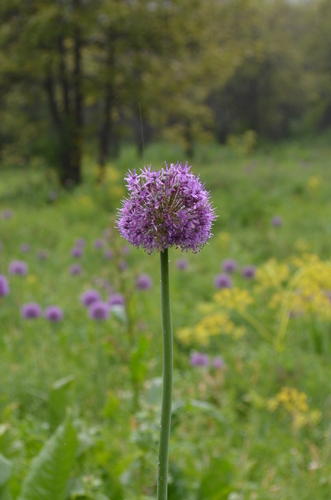
Allium paepalanthoides
Airy Shaw

(c) tuirnee, some rights reserved (CC BY-NC), uploaded by tuirnee

(c) tuirnee, some rights reserved (CC BY-NC), uploaded by tuirnee
What to Eat
Edible parts: Bulb ?
The bulb is eaten.
Where to Find It
It is a temperate plant. It grows in shady and moist slopes in forests and along streams between 1,400-2,000 m above sea level. In Sichuan.
Asia, China,
How to Identify
An onion plant. It has one bulb. It is narrowly oval and 0.5-1.5 cm across. The leaves are sword shaped and 5-15 mm wide.
Wikipedia
Source ↗Allium paepalanthoides is a plant species native to China. It has been reported from Henan, Inner Mongolia, Shaanxi, Shanxi and Sichuan at elevations of 1400–2000 m. Allium paepalanthoides produces a single narrow bulb up to 15 mm across. Scape is up to 50 cm tall. Leaves lance-linear, tapering at the tip, up to 25 mm wide at the widest point. Umbels with many flowers; tepals white with green midveins.
Notes
They have also been put in the family Alliaceae.
Names & Synonyms
Tiansuan
References (1)
- Kang, Y., et al, 2012, Wild food plants and wild edible fungi in two valleys on the Qinling Mountains (Shaanxi, central China) Journal of Ethnobiology and Ethnomedicine; 9:26