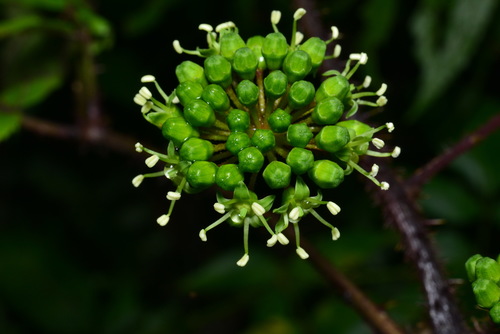
Schefflera brevipedicellata
Harms
AraliaceaeLeaves

gbif · cc-by
Royal Botanic Gardens, Kew
Royal Botanic Gardens, Kew

gbif · cc0
Ingrid P. Lin
Ingrid P. Lin

gbif · cc0
Conveyor Belt
Conveyor Belt
What to Eat
Edible parts: Leaves
The leaves are cooked and eaten as a vegetable, served with chilli sauce and used in pickles.
Where to Find It
It is a tropical plant. It grows on disturbed land and forests in wet valleys between 800-1,300 m above sea level. In Yunnan.
Asia, China, SE Asia, Vietnam,
Countries: United Arab Emirates, Afghanistan, Armenia, Azerbaijan, Bangladesh, Bahrain, Brunei, Bhutan, China, Georgia, Indonesia, Israel, India, Iraq, Iran, Jordan, Japan, Kyrgyzstan, Cambodia, North Korea, South Korea, Kuwait, Kazakhstan, Laos, Lebanon, Sri Lanka, Myanmar, Mongolia, Maldives, Malaysia, Nepal, Oman, Philippines, Pakistan, Qatar, Saudi Arabia, Singapore, Syria, Thailand, Tajikistan, Timor-Leste, Turkmenistan, Turkey, Taiwan, Uzbekistan, Vietnam, Yemen
How to Identify
A shrub or small tree. It grows 10 m tall. The leaf stalks are 19-30 cm long. The leaves have 5-7 leaflets. These are oblong and 10-22 cm long by 5-11 cm wide. The flowers are on several branches and in a group on stalks from a common point. They are produced below the leaves. The fruit is round and 4-5 mm across.
References (1)
- Ghorbani, A., et al, 2012, A comparison of the wild food plant use knowledge of ethnic minorities in Naban River Watershed Nature Reserve, Yunnan, SW China. Journal of Ethnobiology and Ethnomedicine; 8:17