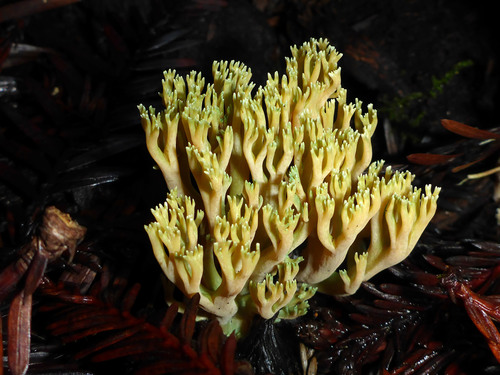
Ramaria rubrievanescens
Marr & Stuntz

(c) Danny Newman, some rights reserved (CC BY-NC-SA), uploaded by Danny Newman

(c) corndog, some rights reserved (CC BY-NC)
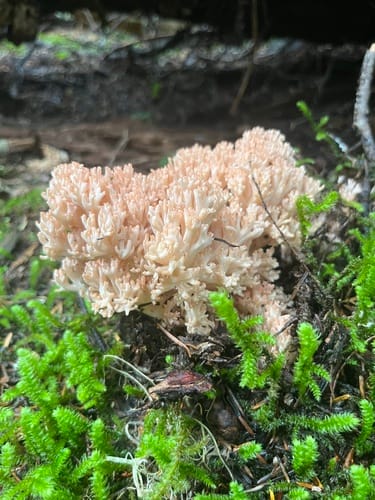
(c) laurenhastings, some rights reserved (CC BY-NC)
What to Eat
Edible parts: Mushroom, Fungus
The mushroom fruiting bodies are eaten.
Where to Find It
It is a subtropical plant.
Mexico, North America,
How to Identify
A subtropical mushroom in the Ramariaceae family sold in local markets.
Wikipedia
Source ↗Ramaria rubrievanescens, commonly known as the fading pink coral, is a coral mushroom in the family Gomphaceae. It is found in North America. The coral is generally white with pinkish branch tips. The stem often bruises brown. Ramaria rubripermanens is quite similar, fruiting in spring and autumn, and retaining color in its tips for longer, while R. rubrievanescens fruits only in autumn, and the colour of the tips fades quickly. Both species have a similar spore size, which are smaller than in R. botrytis. These species are sometimes eaten, but for some people they have a laxative effect.
Other Information
It is sold in local markets.
References (2)
- Perez-Moreno, J. et al, 2008, Wild Mushroom Markets in Central Mexico and a Case Study at Ozumba. Economic Botany, 62(3), 2008, pp. 425–436
- Perez-Moreno, J., et al, 2009, Social and Biotechnological Studies of Wild Edible Mushrooms in Mexico. Acta Botanica Yunnanica Suppl. XV1: 55-61