Lindackeria dentata
(Oliv.) Gilg
AchariaceaeFruit
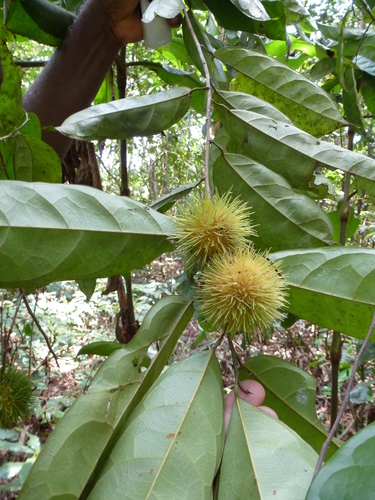
iNaturalist · cc-by-nc
(c) Carel Jongkind, some rights reserved (CC BY-NC), uploaded by Carel Jongkind
(c) Carel Jongkind, some rights reserved (CC BY-NC), uploaded by Carel Jongkind

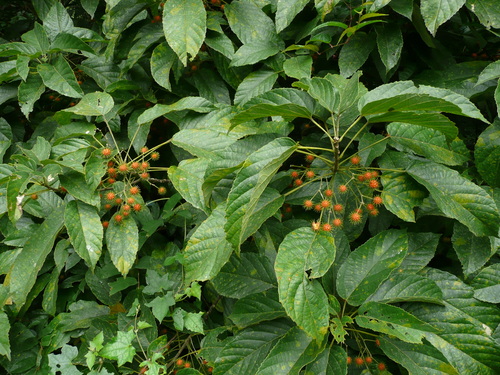
iNaturalist · cc-by-nc
(c) Bart Wursten, some rights reserved (CC BY-NC), uploaded by Bart Wursten
(c) Bart Wursten, some rights reserved (CC BY-NC), uploaded by Bart Wursten
What to Eat
Edible parts: Fruit
The fruit are eaten.
Where to Find It
It is a tropical plant. It grows in the understory in forests.
Africa, Angola, Central Africa, Congo DR, Congo R, Gabon, Guinea, Guinée, West Africa,
Countries: Angola, Burkina Faso, Burundi, Benin, Botswana, Congo (DRC), Central African Republic, Congo (Republic), Cote d'Ivoire, Cameroon, Cape Verde, Djibouti, Algeria, Egypt, Eritrea, Ethiopia, Gabon, Ghana, Gambia, Guinea, Equatorial Guinea, Guinea-Bissau, Kenya, Comoros, Liberia, Lesotho, Libya, Morocco, Madagascar, Mali, Mauritania, Mauritius, Malawi, Mozambique, Namibia, Niger, Nigeria, Rwanda, Seychelles, Sudan, Sierra Leone, Senegal, Somalia, South Sudan, Sao Tome & Principe, Eswatini, Chad, Togo, Tunisia, Tanzania, Uganda, South Africa, Zambia, Zimbabwe
How to Identify
A small tree. It grows 10 m tall. The trunk can be 20 cm across. The leaves are oval to triangle shaped and shiny green on top and dull underneath. They have small teeth along the edge. The flowers are white with bright yellow anthers. They have a sweet scent. The fruit have long spines. The fruit are orange when ripe.
Production
Trees flower March to May and fruit May to November.
Notes
Also put in the family Flacourtiaceae.
References (2)
- Nkeoua, G. & Boundzanga, G. C., 1999, Donnees sur les produits forestieres non ligneux en Republique du Congo. FAO. p 30
- World Checklist of Useful Plant Species 2020. Royal Botanic Gardens, Kew