Salacca magnifica
Mogea
Red salak palm

iNaturalist · cc-by
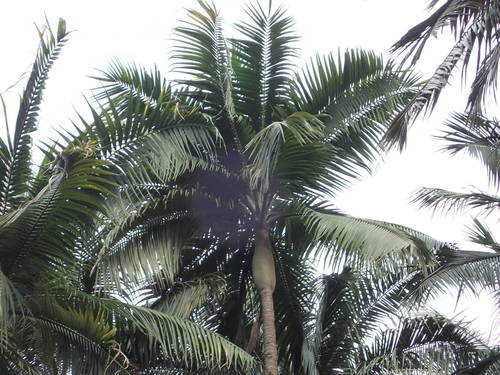
(c) Scott Zona from Miami, Florida, USA, some rights reserved (CC BY)
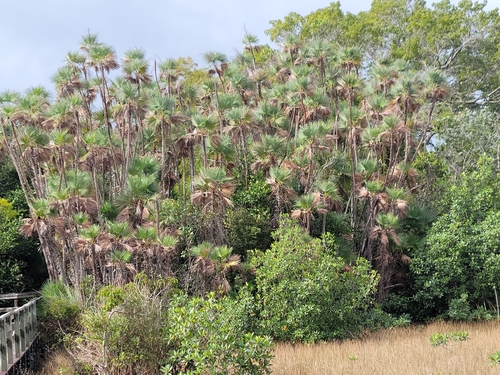
(c) Scott Zona from Miami, Florida, USA, some rights reserved (CC BY)

wikimedia · cc-by-sa
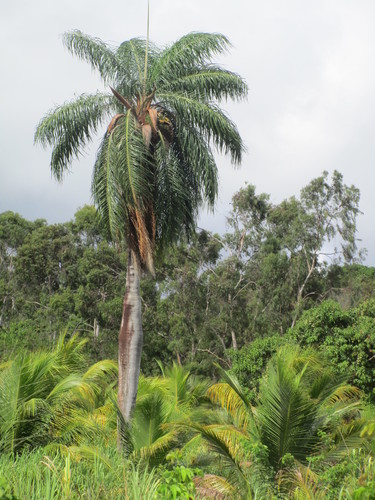
Wikimedia Commons - Photo by David J. Stang
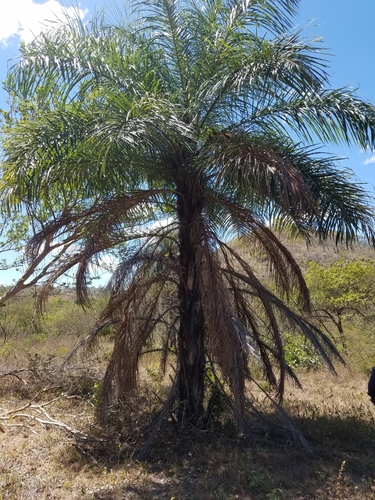
Wikimedia Commons - Photo by David J. Stang
What to Eat
Edible parts: Fruit
The fruits are eaten raw, though they have a slightly bitter taste.
Where to Find It
It is a tropical plant. It grows in lowland rainforests on moist soils.
Asia, Australia, Indonesia*, Malaysia*, SE Asia, Singapore,
Countries: United Arab Emirates, Afghanistan, Armenia, Australia, Azerbaijan, Bangladesh, Bahrain, Brunei, Bhutan, China, Georgia, Indonesia, Israel, India, Iraq, Iran, Jordan, Japan, Kyrgyzstan, Cambodia, North Korea, South Korea, Kuwait, Kazakhstan, Laos, Lebanon, Sri Lanka, Myanmar, Mongolia, Maldives, Malaysia, Nepal, Oman, Philippines, Pakistan, Qatar, Saudi Arabia, Singapore, Syria, Thailand, Tajikistan, Timor-Leste, Turkmenistan, Turkey, Taiwan, Uzbekistan, Vietnam, Yemen
How to Identify
A clustered palm. It only has a short stem. The leaves are simple and very large. They can be 5 m long and 70 cm wide. They are bright green on the upper surface and paler underneath. The stalks and sheaths are spiny. The fruit are covered with irregular rows of blackish brown scales.
Nutrition Score: 29/100
| Part | Moisture | kJ | kcal | Protein | Vit A | Vit C | Iron | Zinc |
|---|---|---|---|---|---|---|---|---|
| Fruit | 79.8 | 326 | 78 | 0.6 | — | 0.9 | 1.3 | 20.4 |
How to Grow
Plants can be grown from seeds or suckers.
Names & Synonyms
Remayong, Salak merah, Salak pondoh
References (4)
- Hoe, V. B. & Siong, K. H., 1999, The nutritional value of indigenous fruit and vegetables in Sarawak. Asia Pacific J. Clin. Nutr. 8(1):24-31 (As Zalacca magnifica)
- Milow, P., et al, 2013, Malaysian species of plants with edible fruits or seeds and their evaluation. International Journal of Fruit Science. 14:1, 1-27
- Shaffiq, A. M., A., et al, 2013, Marketable wild fruits of Sarawak, Borneo: Their mode of consumption, uses and sugar profiles. Indian Journal of Traditional Knowledge. Vol 12(2): 195-201
- Sukarya, D. G., (Ed.) 2013, 3,500 Plant Species of the Botanic Gardens of Indonesia. LIPI p 818