Catostemma commune
Sandwith
Swamp baromalli
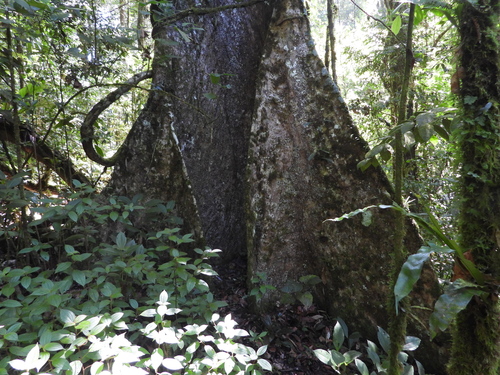
(c) Sébastien SANT, some rights reserved (CC BY-NC), uploaded by Sébastien SANT
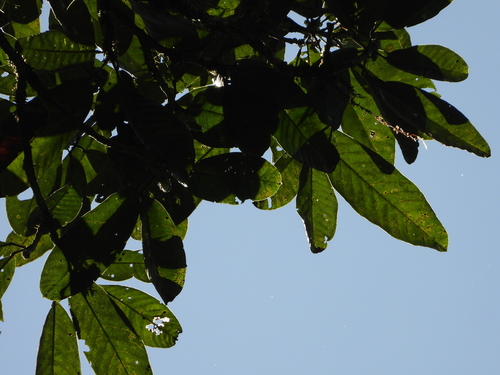
(c) Sébastien SANT, some rights reserved (CC BY-NC), uploaded by Sébastien SANT
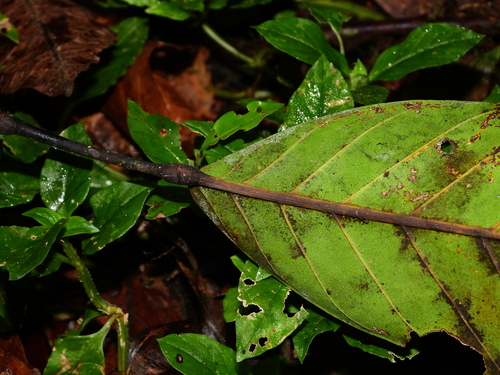
(c) Sébastien SANT, some rights reserved (CC BY-NC), uploaded by Sébastien SANT
What to Eat
Edible parts: Seeds
The fleshy seed wall is eaten.
Where to Find It
It is a tropical plant. It grows in mixed forest in river basins.
Amazon, Brazil, Central America, Colombia, French Guiana, Guyana, Panama, South America, Venezuela,
How to Identify
A tree. It grows 30-45 m tall. The trunk is 50-70 cm across. The leaves are alternate and clustered at the ends of the small branches. The leaf stalk is 1-9 cm long. It is thickened at both ends. They blades are stiff and papery. They are narrowly oval and 4-19 cm long by 2-9 cm wide. The seedlings have leaflets arranged like fingers on a hand. The flowering shoots are in clusters in the axils of leaves. The flowers have a sweet scent. They are tube shaped and 1 cm long. The petals are white. The fruit is a woody capsule 7-10 cm long by 3-5 cm wide. It is rusty brown. They are densely velvet and have one seed. This is orange and 5-8 cm long by 2-3 cm wide. The seed wall is fleshy and edible.
How to Grow
Plants grown from seeds. Seedlings when damaged can re-sprout.
Medicinal Uses
The seed is used in the treatment of snoring.
Other Uses
The bark is beaten with the back of an axe into large slabs which are spread out as floors and walls. The heartwood is a dull yellowish-brown to pinkish-brown colour; it is distinctly but not sharply demarcated from the lighter yellowish-brown sapwood, which is often discoloured by sap-stain fungi. The grain is straight; the texture coarse; growth rings are not distinct; there is no distinctive odour or taste. An unusual feature of this wood is the presence of streaks of varying lengths on the longitudinal surfaces and as concentric arcs on the end-grain. The wood is soft light to medium-weight; not durable in contact with the soil. It works easily with machine or hand tools; the timber has only a moderate blunting effect, although the numerous bands of resin in the wood ducts may cause chipping of the planing and moulding knives. The wood requires a considerable amount of filler but can be stained and polished satisfactorily, although not to a high lustre. It takes glue well and can be nailed without splitting. The wood is reported to be suitable for both dry and wet cooperage, interior work, box shock, paper pulp, utility plywood, and light construction. Good quality molasses barrels were made of baromalli at Barbados for a short period when imported barrels were not available. The results of mechanical tests indicate this wood may be suitable for tool handles and certain sports equipment. It is also considered a prospective timber for inexpensive furniture.
Production
In Guyana it flowers February to May and fruits October to May.
Notes
Also put in the family Bombacaceae. In the subfamily Bombacoideae.
Names & Synonyms
Baramanni, Baromalli, Katama, Paku, Simana, Xapu uhi
References (4)
- Grandtner, M. M. & Chevrette, J., 2013, Dictionary of Trees, Volume 2: South America: Nomenclature, Taxonomy and Ecology. Academic Press p 110
- Kew Plants of the World On line
- Polak, A. M., 1992, Major Timber Trees of Guyana. A Field Guide. Tropenbos Series 2. Wageningen. p 65
- www.proyanomami.org