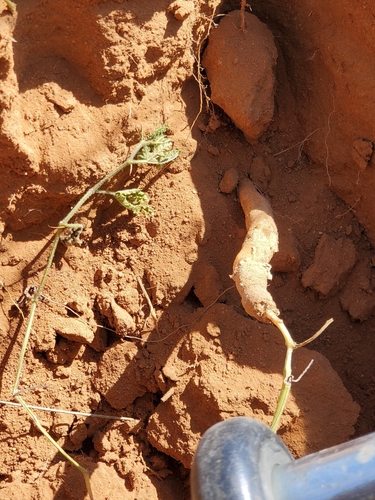
Urceodiscus belensis
(Merr. & L. M. Perry) W.J. de Wilde & Duyfjes
CucurbitaceaeFruit

gbif · cc-by
Royal Botanic Gardens, Kew
Royal Botanic Gardens, Kew

gbif · cc-by
Royal Botanic Gardens, Kew
Royal Botanic Gardens, Kew
What to Eat
Edible parts: Fruit
The fruit is edible.
Where to Find It
It is a tropical plant. It grows between 1,900-2,900 m above sea level. In PNG it grows in the Western Highlands.
Asia, Indonesia, Papua New Guinea, PNG, SE Asia, West Papua,
Countries: United Arab Emirates, Afghanistan, Armenia, Azerbaijan, Bangladesh, Bahrain, Brunei, Bhutan, China, Georgia, Indonesia, Israel, India, Iraq, Iran, Jordan, Japan, Kyrgyzstan, Cambodia, North Korea, South Korea, Kuwait, Kazakhstan, Laos, Lebanon, Sri Lanka, Myanmar, Mongolia, Maldives, Malaysia, Nepal, Oman, Papua New Guinea, Philippines, Pakistan, Qatar, Saudi Arabia, Singapore, Syria, Thailand, Tajikistan, Timor-Leste, Turkmenistan, Turkey, Taiwan, Uzbekistan, Vietnam, Yemen
How to Identify
A pumpkin family herb. It is a climber and grows 4 m long. The stem is 1 mm across. The plant is hairy. The leaves are oval and 4-14 cm long by 2-6 cm wide. There can be lobes near the base. Male and female flowers are separate. The flowers are yellow. The fruit are bright shiny red.
Notes
The name is ambiguous.
Names & Synonyms
Tagan
Melothria belensis Merr. & L. M. PerryMelothria cissybium M. JacobsPapuasicyos belensis (Merr. & L. M. Perry) H. Schaef. & S. S. Renner
References (5)
- Blumea 7:617, 1954 (As Zehneria cissybium)
- De Wilde, W. J. J. P. & Duyfjes, B. E. E., 2006, Redefinition of Zehneria and four new related Genera (Cucurbitaceae), with an enumeration of the Australasian and Pacific Species. Blumea 51:1-88 (As
- Milliken, W., 2000, Ethnobotany of the Yali of West Papua. Royal Botanical Garden, Edinburgh. p 10 (As Zehneria cissybium) (near Baliem)
- Sillitoe, (As Zehneria cissybium)
- Plants of Papua New Guinea LAE herbarium record (As Melothria belensis Merr. & L. M. Perry)