Chrysalidocarpus spp.
ArecaceaeShoots

gbif · cc-by-sa
GBIF
GBIF

gbif · cc-by-sa
GBIF
GBIF

gbif · cc-by-sa
GBIF
GBIF
What to Eat
Edible parts: Cabbage, Palm heart
The palm heart is harvested as food, similar to cabbage.
Where to Find It
A tropical plant.
Africa, Australia, East Africa, Madagascar,
Countries: Angola, Australia, Burkina Faso, Burundi, Benin, Botswana, Congo (DRC), Central African Republic, Congo (Republic), Cote d'Ivoire, Cameroon, Cape Verde, Djibouti, Algeria, Egypt, Eritrea, Ethiopia, Gabon, Ghana, Gambia, Guinea, Equatorial Guinea, Guinea-Bissau, Kenya, Comoros, Liberia, Lesotho, Libya, Morocco, Madagascar, Mali, Mauritania, Mauritius, Malawi, Mozambique, Namibia, Niger, Nigeria, Rwanda, Seychelles, Sudan, Sierra Leone, Senegal, Somalia, South Sudan, Sao Tome & Principe, Eswatini, Chad, Togo, Tunisia, Tanzania, Uganda, South Africa, Zambia, Zimbabwe
How to Identify
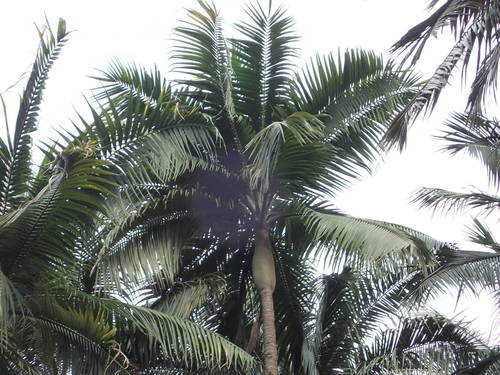
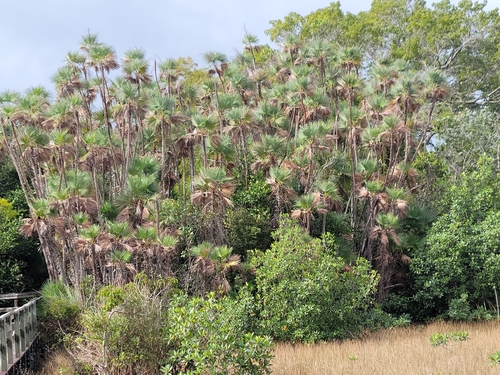
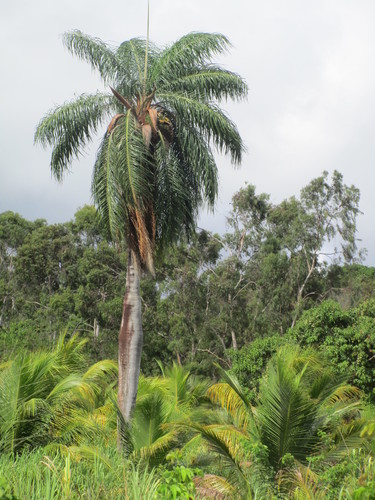
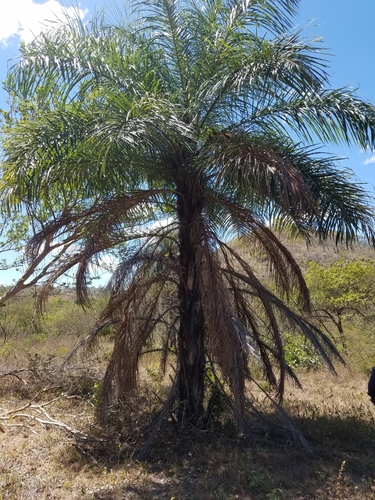
A tropical palm in the family Arecaceae, of which about 20 species exist (now mostly classified under Dypsis).
Notes
There are about 20 Chrysalidocarpus species.
Names & Synonyms
See Dypsis
References (6)
- Balick, M.J. and Beck, H.T., (Ed.), 1990, Useful palms of the World. A Synoptic Bibliography. Colombia p 121
- Bodkin, F., 1991, Encyclopedia Botanica. Cornstalk publishing, p 254
- Gibbons, M., 1993, Palms. Compact study Guide and Identifier. Sandstone. p 33
- Jardin, C., 1970, List of Foods Used In Africa, FAO Nutrition Information Document Series No 2.p 66
- Jones, D.L., 2000, Palms of Australia 3rd edition. Reed/New Holland. p 145
- Lord, E.E., & Willis, J.H., 1999, Shrubs and Trees for Australian gardens. Lothian. p 94