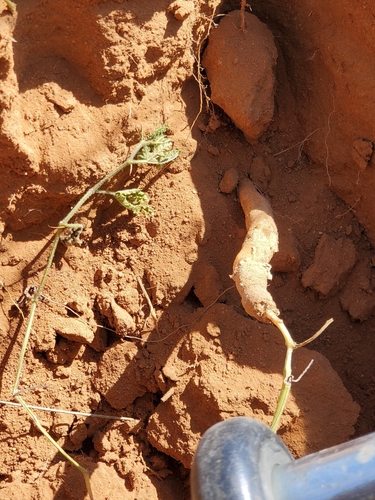
Melothria cucumis
Vell.
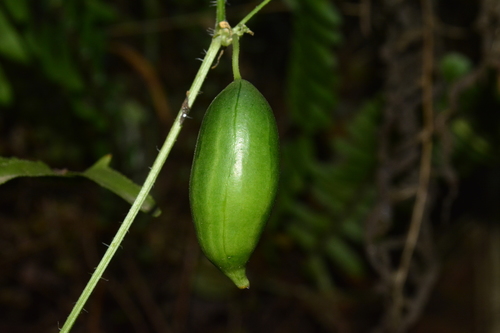
(c) Frederico Acaz Sonntag, some rights reserved (CC BY-NC), uploaded by Frederico Acaz Sonntag
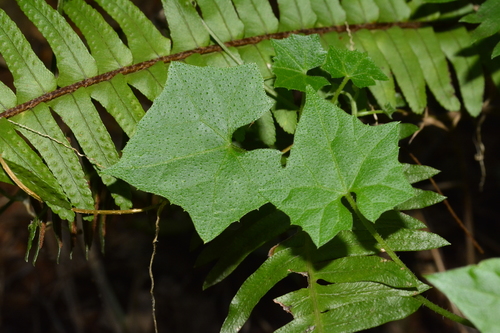
(c) Frederico Acaz Sonntag, some rights reserved (CC BY-NC), uploaded by Frederico Acaz Sonntag
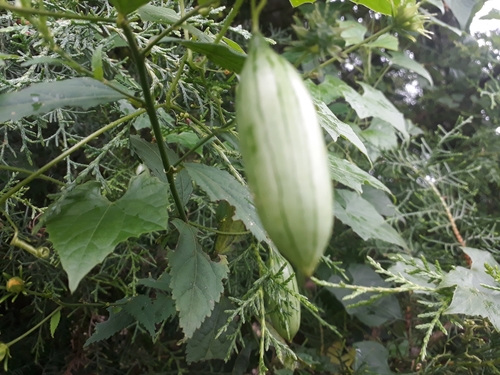
(c) naneumann, some rights reserved (CC BY-NC)
What to Eat
Edible parts: Fruit
The fruit is eaten raw or used in pickles.
Where to Find It
It is a temperate plant. In Argentina it grows from sea level to 1,000 m above sea level.
Argentina, Bolivia, Brazil*, Paraguay, South America*, Uruguay,
How to Identify
A climber. It grows each year from seed. The leaves are round with 5 angles or lobes. They are 3-9 cm long. The fruit are oval and 30-40 mm long by 20-25 mm wide. The seeds are oval and 7 mm long by 3.5 mm wide.
Wikipedia
Source ↗Melothria cucumis is a species of flowering plant in the cucurbit family native to Bolivia, Paraguay, Peru, Uruguay, and parts of Argentina and Brazil. It is a herbaceous vine which produces oblong-ovoid green fruits 3–4 cm (1.2–1.6 in) long and 2–2.5 cm (0.8–1.0 in) wide. Plants use tendrils to climb.
Names & Synonyms
Pepininho, Pepino-de-sapo, Popino
References (4)
- Brack, P., et al, 2020, Frutas nativas do Rio Grande do Sul, Brasil: riqueza e potencial alimentício. Native fruits of Rio Grande do Sul, Brazil: richness and potential as food. Rodriguésia 71: e03102018.
- Kinupp, V. F., 2007, Plantas alimenticias nao-convencionais da regiao metropolitana de Porto Alegre, RS, Brazil p 75
- Reis, S. V. and Lipp, F. L., 1982, New Plant Sources for Drugs and Foods from the New York Botanical Garden herbarium. Harvard. p 297
- www.colecionandofrutas.org