Polyscias balfouriana
(Andre) L. H. Bailey
Balfour's aralia
AraliaceaeLeaves

iNaturalist · cc-by-nc
(c) alyanasalsabila, some rights reserved (CC BY-NC)
(c) alyanasalsabila, some rights reserved (CC BY-NC)

iNaturalist · cc-by-nc
(c) ma_thilda, some rights reserved (CC BY-NC)
(c) ma_thilda, some rights reserved (CC BY-NC)

iNaturalist · cc-by-nc
(c) ma_thilda, some rights reserved (CC BY-NC)
(c) ma_thilda, some rights reserved (CC BY-NC)
What to Eat
Edible parts: Leaves
The leaves are eaten.
Where to Find It
It is a tropical plant.
Dominican Republic, Fiji, Nauru, Pacific, Vanuatu, West Indies,
Countries: Antigua & Barbuda, Australia, Barbados, Bahamas, Cuba, Dominica, Dominican Republic, Fiji, Micronesia, Grenada, Haiti, Jamaica, Kiribati, St Kitts & Nevis, St Lucia, Marshall Islands, Nauru, New Zealand, Papua New Guinea, Puerto Rico, Palau, Solomon Islands, Tonga, Trinidad & Tobago, Tuvalu, St Vincent, Vanuatu, Samoa
How to Identify
A large shrub. It grows 3 m tall. The leaves are 20-50 cm long. They are compound with leaflets 5-20 cm long and 5-18 cm wide. The end leaflet is the largest.
How to Grow
It is grown as a hedge.
Wikipedia
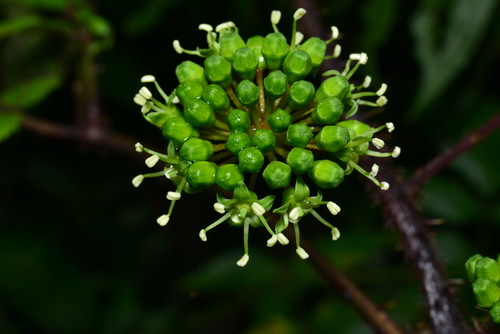
Source ↗Polyscias balfouriana, known as Balfour aralia or dinner plate aralia, is a species in the family Araliaceae. The species is native from New Guinea to Queensland, Australia. It is a bushy shrub. Leaves are alternate and have long petioles. Flowers are white with 5 petals. The specific epithet honors John Hutton Balfour. The species is often grown in cultivation as an ornamental.
Names & Synonyms
Aralia balfouriana AndrePanax balfourii Pynaert ex Sand.
References (1)
- Jansen, A. A. J., et al, (Eds), 1990, Food and Nutrition in Fiji. Volume One. p 38