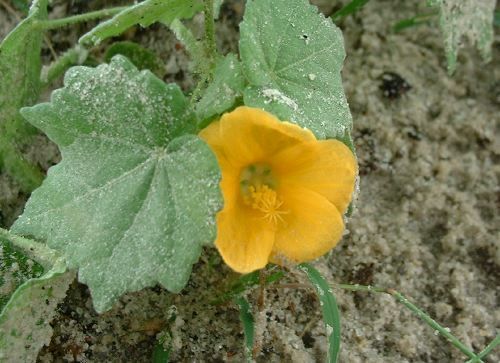
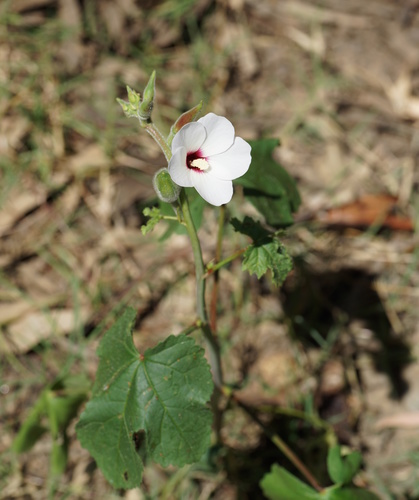
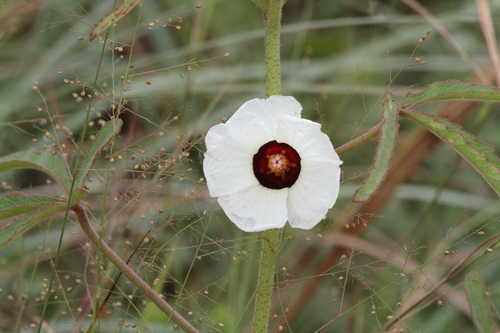
Hibiscus eetveldeanus
De Wild. & Th. Dur.
MalvaceaeLeaves
iNaturalist · cc-by-nc
(c) Maël Dewynter, some rights reserved (CC BY-NC)
(c) Maël Dewynter, some rights reserved (CC BY-NC)

wikimedia · cc-by-sa
Wikimedia Commons - 阿橋 HQ
Wikimedia Commons - 阿橋 HQ
What to Eat
Edible parts: Leaves
The young shoots and leaves are steamed and eaten.
Where to Find It
It is a tropical plant.
Asia, Indonesia, SE Asia,
Countries: United Arab Emirates, Afghanistan, Armenia, Azerbaijan, Bangladesh, Bahrain, Brunei, Bhutan, China, Georgia, Indonesia, Israel, India, Iraq, Iran, Jordan, Japan, Kyrgyzstan, Cambodia, North Korea, South Korea, Kuwait, Kazakhstan, Laos, Lebanon, Sri Lanka, Myanmar, Mongolia, Maldives, Malaysia, Nepal, Oman, Philippines, Pakistan, Qatar, Saudi Arabia, Singapore, Syria, Thailand, Tajikistan, Timor-Leste, Turkmenistan, Turkey, Taiwan, Uzbekistan, Vietnam, Yemen
How to Identify
An annual herb. It is slender and has a few branches. It can grow 2.5 m tall. It is usually red. The leaves are alternate and have long leaf stalks. The leaves are oval but the lowest ones have 5 deep lobes. They have teeth along the edge. The leaves are 2-12 cm long. The flowers occur singly in the axils of the leaves. The fruit has a red calyx enclosing the fruit. This is red. It has many seeds. The seeds are round or kidney shaped. (It is something like rosella.)
How to Grow
Plants can be grown by seeds or cuttings.
Medicinal Uses
Traditional use in the Philippines (FPI).
Other Information
It is a cultivated food plant.
References (1)
- Ochse, J.J. et al, 1931, Vegetables of the Dutch East Indies. Asher reprint. p 473