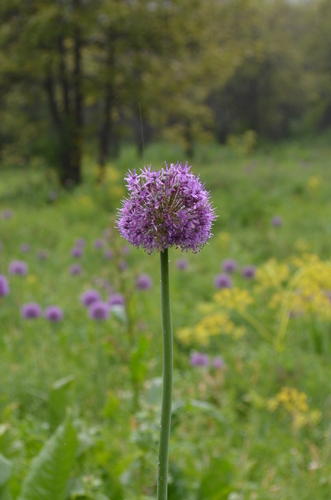
Allium amplectens
Torr.
Desert chives, Narrowleaf onion, Slimleaf onion

iNaturalist · cc-by
(c) Daniel Kennedy, some rights reserved (CC BY), uploaded by Daniel Kennedy
(c) Daniel Kennedy, some rights reserved (CC BY), uploaded by Daniel Kennedy

iNaturalist · cc-by-nc-sa
(c) 2008 Keir Morse, some rights reserved (CC BY-NC-SA)
(c) 2008 Keir Morse, some rights reserved (CC BY-NC-SA)

iNaturalist · cc-by-nc
(c) Cat Chang, some rights reserved (CC BY-NC), uploaded by Cat Chang
(c) Cat Chang, some rights reserved (CC BY-NC), uploaded by Cat Chang
What to Eat
Edible parts: Flowers, Leaves, Bulb
The bulb, leaves, and flowers are all edible.
Where to Find It
It is a temperate plant.
Canada, North America, USA,
Countries: Antigua & Barbuda, Barbados, Bahamas, Belize, Canada, Costa Rica, Cuba, Dominica, Dominican Republic, Grenada, Guatemala, Honduras, Haiti, Jamaica, St Kitts & Nevis, St Lucia, Mexico, Nicaragua, Panama, Puerto Rico, El Salvador, Trinidad & Tobago, United States, St Vincent
How to Identify
An onion herb. It grows 30 cm tall. The bulb is pinkish brown. The flower is at the top of a naked green stem. This initially has pink bracts. The flowers are white to pink.
Wikipedia
Source ↗Allium amplectens, the narrowleaf onion, is a species of flowering plant. It is an onion native to the west coast of the United States, in Oregon, Washington State and California, also British Columbia in Canada. It grows in woods and especially in clay and serpentine soils.
Names & Synonyms
Allium acuminatum var. gracile Alph.WoodAllium attenuatum KelloggAllium attenuifolium KelloggAllium occidentale A. Grayand others
References (2)
- Saanich Native Plants. saanishnativeplants.com
- Wikipedia,