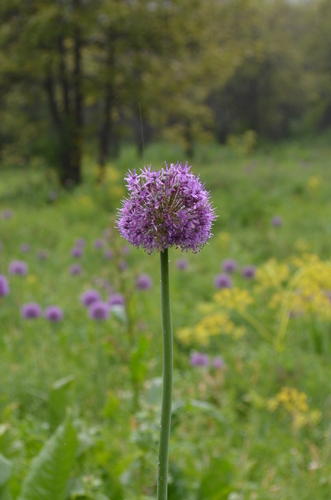
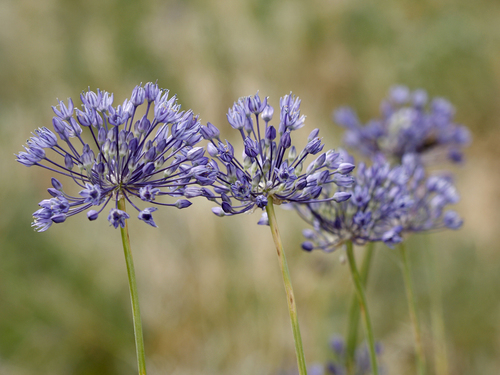
Allium caeruleum
Pall.
Blue globe onion
(c) Aleksandr Popov / Александр Попов, some rights reserved (CC BY-NC), uploaded by Aleksandr Popov / Александр Попов

(c) Aleksandr Popov / Александр Попов, some rights reserved (CC BY-NC), uploaded by Aleksandr Popov / Александр Попов
(c) ruslan, some rights reserved (CC BY-NC), uploaded by ruslan
What to Eat
Edible parts: Leaves, Bulbs, Caution
Where to Find It
It is a temperate plant. It grows on dry slopes and plains between 1,100-2,300 m above sea level in western China.
Asia, Central Asia, China, Kazakhstan, Kyrgyzstan, Russia, Tajikistan, Uzbekistan,
How to Identify
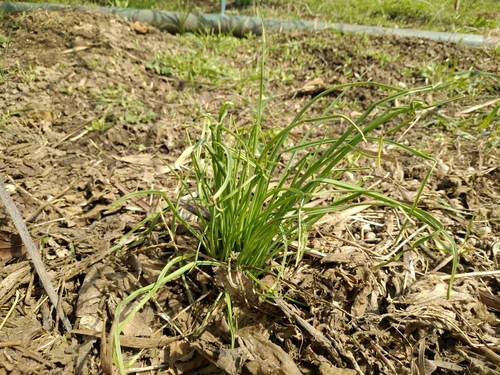
An onion family herb. It has one bulb. This is 1-2 cm across. There are usually bulbils at the base. The leaves are narrow. They are 2-5 mm across. The fruit stalk is 25-35 cm long. There are leaf sheaths for about 1/3 of its length.
Wikipedia
Source ↗Allium caeruleum (blue globe onion, blue ornamental onion, blue-of-the-heavens, blue-flowered garlic; syn. Allium azureum Ledeb.) is an ornamental bulbous plant of the onion genus, native to Central Asia (Kazakhstan, Kyrgyzstan, Siberia, Tajikistan, Uzbekistan, and Xinjiang). In these regions, it is found on dry slopes, plains, and steppes. This plant is cited in the Flore des Serres et des Jardins de l'Europe puis L'illustration horticole by Charles Antoine Lemaire. It grows to 80 cm (31"), producing strap-shaped leaves and small globes (umbels) of blue flowers in early summer. The one-inch wide globular flower heads attract butterflies. The plant has been granted the British Royal Horticultural Society's Award of Garden Merit (1993). A. caeruleum thrives in well-drained soil in full to partial sun. It is deer-resistant and suitable for USDA hardiness zones 4–8.
Names & Synonyms
References (1)
- Brevard County Edible Acres