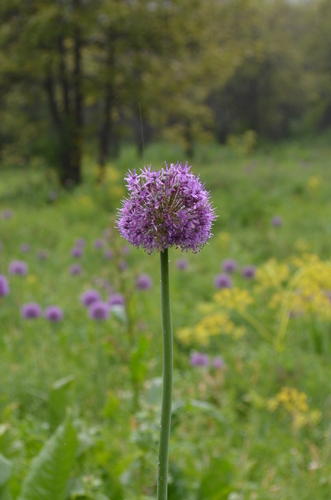
Allium caesium
Schrenk
Blue onion
(c) Stanislav Litovkin, some rights reserved (CC BY-NC)
(c) Stanislav Litovkin, some rights reserved (CC BY-NC)
(c) Елана, some rights reserved (CC BY-NC)
What to Eat
Edible parts: Bulbs
The bulbs are eaten.
Where to Find It
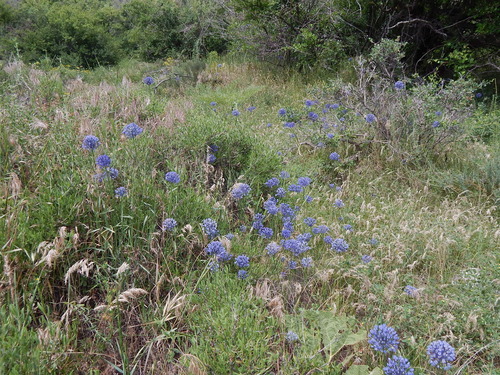
It is a temperate plant. It grows in deserts and dry pastures between 700-2,000 m above sea level in western China.
Asia, Central Asia, China, Himalayas, India, Kazakhstan, Kyrgyzstan, Sikkim, Tajikistan, Uzbekistan,
How to Identify
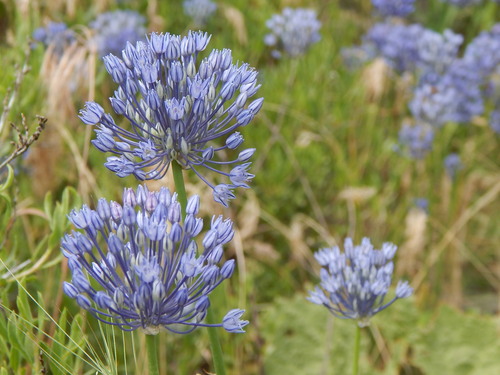
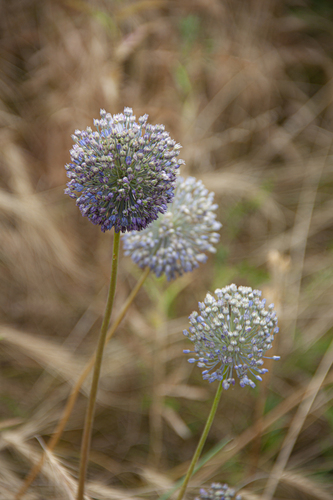
An onion family herb. It has one bulb. This is oval and 1-2 cm across. There are brown or violet bulbils at the base, There are 2 or 3 leaves. These are 1-3 mm wide. They have a channel along the top. The stalk is 15-65 cm long.
Wikipedia
Source ↗Allium caesium, light blue garlic, is a species of herbaceous perennial flowering plant native to central Asia (Xinjiang, Kazakhstan, Kyrgyzstan, Tajikistan, Uzbekistan). It grows in deserts and dry fields at elevations of 700–2,000 m (2,300–6,600 ft). Allium caesium is typically about 30–40 cm (12–16 in) tall, and grows best in full sun to partial shade. It produces round bulbs up to 15 mm across. The scapes are up to 65 cm (26 in) tall. The leaves are round in cross-section, and slightly shorter than the scapes. The flowers are sky-blue. They typically appear in the summer (June to August in England) and attract pollinators such as bees and butterflies. The Latin specific epithet caesium means "grey-blue". In cultivation in the UK, this plant has gained the Royal Horticultural Society's Award of Garden Merit. In the US it is suitable for hardiness zones 4-7.
Names & Synonyms
Zhi mu xie
References (5)
- Aipeisova S.A., et al, 2019, Wild useful herbs of Aktobe Region (Western Kazakhstan). Ukrainian Journal of Ecology, 9(3), 329-331
- Brevard County Edible Acres
- Khassanov, F. O., 2007, Edible Alliums of Uzbekistan. in First Kazbegi workshop on "Botany, taxonomy and phytochemistry of wild Allium L. species of the Caucasus and Central Asia". (Also as Allium renardii)
- Sharma, L. et al, 2018, Diversity, distribution pattern, endemism and indigenous uses of wild edible plants in Cold Desert Biosphere Reserve of Indian Trans Himalaya. Indian Journal of Traditional Knowledge. Vol 17(1) January 2018 pp 122-131
- Sundrayal, M., et al, 2004, Dietary Use of Wild Plant Resources in the Sikkim Himalaya, India. Economic Botany 58(4) pp 626-638