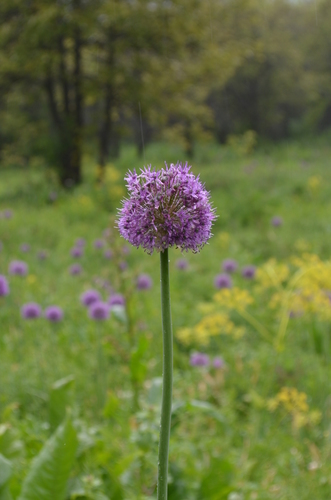
Allium diabolense
(Ownbey & Aase ex Traub) McNeal
Serpentine onion

(c) Ken-ichi Ueda, some rights reserved (CC BY), uploaded by Ken-ichi Ueda
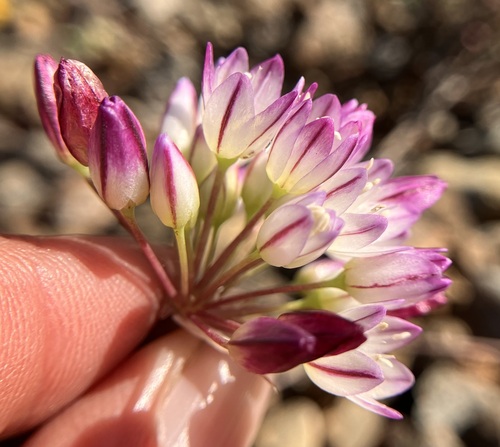
(c) Cat Chang, some rights reserved (CC BY-NC), uploaded by Cat Chang
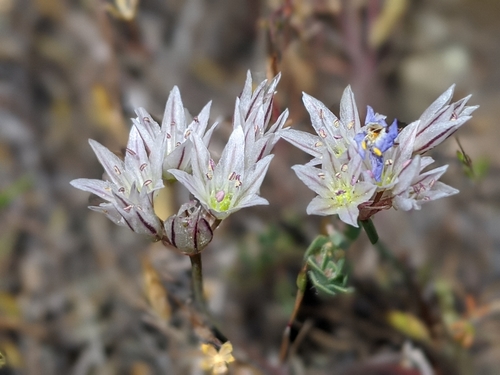
(c) Christian Schwarz, some rights reserved (CC BY-NC), uploaded by Christian Schwarz
What to Eat
Edible parts: Bulb ?
The bulb is edible.
Where to Find It
It is a temperate plant.
North America, USA,
How to Identify
A temperate herb in the Amaryllidaceae (onion) family, native to serpentine soils.
Wikipedia
Source ↗Allium diabolense (serpentine onion or devil's onion) is a species of wild onion endemic to central California in the Coast Ranges and the Transverse Ranges. It grows on serpentine soils at elevations of 500 to 1500 m, from Kern and Ventura Counties north to Stanislaus and Santa Clara Counties. Allium diabolense grows from a reddish-brown bulb just over a centimeter long. It produces a stem up to 20 centimeters tall and a single leaf, which is longer than the stem. The inflorescence contains up to 50 dark-veined, pink-tinted white flowers. Its anthers and pollen are yellow.
Names & Synonyms
References (1)
- Brevard County Edible Acres