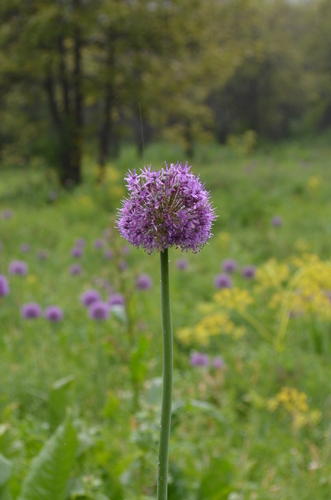
Allium jesdianum
Boiss. & Buhse
Big ball onion

iNaturalist · cc-by
(c) delirium florens, some rights reserved (CC BY)
(c) delirium florens, some rights reserved (CC BY)

iNaturalist · cc-by-nc-nd
(c) Gwendolyn Stansbury, some rights reserved (CC BY-NC-ND)
(c) Gwendolyn Stansbury, some rights reserved (CC BY-NC-ND)
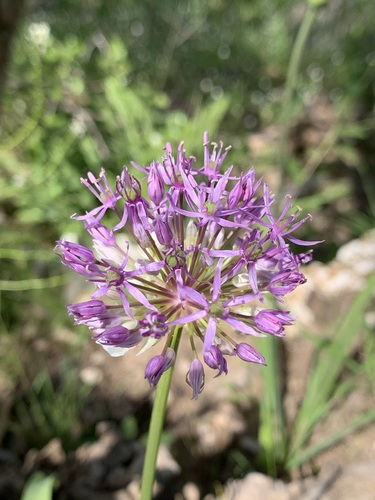
iNaturalist · cc-by-nc
(c) Arya Aras, some rights reserved (CC BY-NC)
(c) Arya Aras, some rights reserved (CC BY-NC)
What to Eat
Edible parts: Leaves
The leaves are eaten.
Known Hazards
Where to Find It
It is a temperate plant.
Asia, Iraq, Japan, Middle East,
Countries: United Arab Emirates, Afghanistan, Armenia, Azerbaijan, Bangladesh, Bahrain, Brunei, Bhutan, China, Georgia, Indonesia, Israel, India, Iraq, Iran, Jordan, Japan, Kyrgyzstan, Cambodia, North Korea, South Korea, Kuwait, Kazakhstan, Laos, Lebanon, Sri Lanka, Myanmar, Mongolia, Maldives, Malaysia, Nepal, Oman, Philippines, Pakistan, Qatar, Saudi Arabia, Singapore, Syria, Thailand, Tajikistan, Timor-Leste, Turkmenistan, Turkey, Taiwan, Uzbekistan, Vietnam, Yemen
How to Identify
An onion herb in the Amaryllidaceae family with edible leaves, found in temperate regions.
Wikipedia
Source ↗Allium jesdianum is a species of onion found mainly in Iran, with populations in Afghanistan and possibly Iraq and Uzbekistan. It is cultivated around the world as an ornamental. Its 'Akbulak' and 'Early Emperor' cultivars gained the Royal Horticultural Society's Award of Garden Merit in 2016, and are also considered by them as good plants to attract pollinators. It has been incorrectly listed for sale by commercial nurseries as Allium rosenbachianum.
Notes
It contains steroidal glycosides.
Names & Synonyms
Sûrebne
Allium jesdianum subsp. jesdianum
References (2)
- Brevard County Edible Acres
- Pieroni, A., et al, 2017, The spring has arrived: traditional wild vegetables gathered by Yarsanis (Ahl-e Haqq) and Sunni Muslims in Western Hawraman, SE Kurdistan (Iraq). Acta Soc Bot Pol 86(1):3519