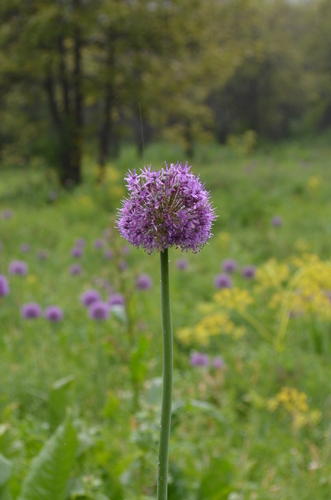
Allium perdulce
S. V. Fraser
Plains onion, Fraser's onion

(c) Chuck Sexton, some rights reserved (CC BY-NC), uploaded by Chuck Sexton
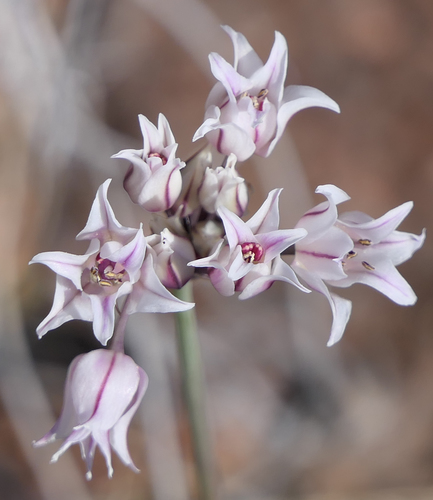
(c) bennyep, some rights reserved (CC BY-NC)
What to Eat
Edible parts: Bulbs, Leaves
The bulbs and leaves are eaten.
Where to Find It
It is a temperate plant.
North America, USA,
How to Identify
A temperate herb in the Amaryllidaceae family with edible bulbs and leaves characteristic of onion plants.
Wikipedia
Source ↗Allium perdulce, the Plains onion, is a plant species native to the central part of the United States and cultivated as an ornamental elsewhere. It has been found in Texas, New Mexico, Oklahoma, Kansas, Nebraska, South Dakota, and one county in western Iowa (Woodbury County). The species name, "perdulce", is neo Latin meaning "especially sweet". This is a reference to the scent of the flowers which resembles hyacinths. Allium perdulceproduces 2-20 bulbs, each up to 3 cm (1.2 inches) in diameter. Flowers are urn-shaped, up to 10 mm (0.4 inches) across; tepals deep rose to purple (except in var. sperryi; see below); pollen yellow. Two varieties are recognized: Allium perdulce var. perdulce Allium perdulce var. sperryi Ownbey Var. sperryi is a color variant known only from western Texas in the trans-Pecos region. It has white to pale pink flowers instead of the more widespread deep rose to purple.
Names & Synonyms
References (3)
- Brevard County Edible Acres
- Jordan, J., et al, 2006, Vascular Plants Utilized by the Plains Apache in Southwestern Oklahoma, Publications of the Oklahoma Biological Survey. 2nd Series. Volume 7: 24-33, 2006
- Tozer, F., 2007, The Uses of Wild Plants. Green Man Publishing. p 24