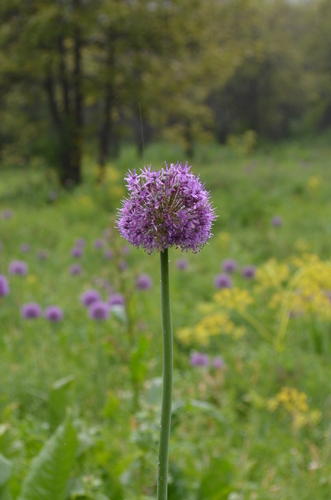
Allium rubens
Schrad. ex Willd.
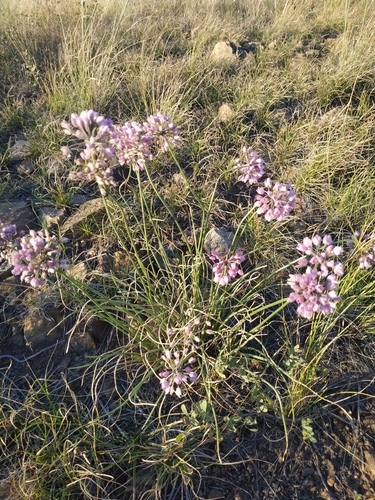
(c) Денис Елин, some rights reserved (CC BY-NC), uploaded by Денис Елин
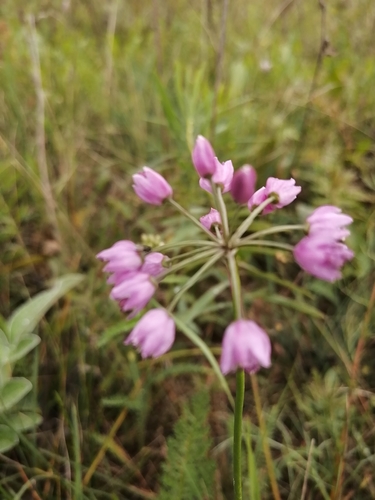
(c) Эвелина Ишмухаметова, some rights reserved (CC BY-NC), uploaded by Эвелина Ишмухаметова
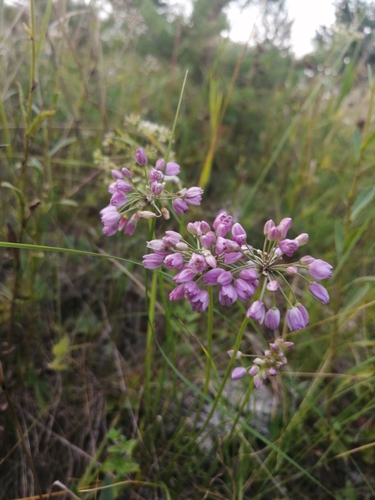
(c) Эвелина Ишмухаметова, some rights reserved (CC BY-NC), uploaded by Эвелина Ишмухаметова
What to Eat
Edible parts: Bulb ?
Where to Find It
It is a temperate plant. It grows on stony slopes and steppes in western China.
Asia, Central Asia, China, Kazakhstan, Mongolia, Russia,
How to Identify
An onion plant. It has a cluster of bulbs. They are narrowly cone shaped and 1 cm across. The leaves are 1-2 mm across. There is a channel along the top.
Wikipedia
Source ↗Allium rubens, the reddish onion, is a species of onions native to Siberia, European Russia, Mongolia, Kazakhstan and Xinjiang. It grows in sunlit locations on steppes and scrublands. Allium rubens produces clusters of small, narrow bulbs up to 10 mm in diameter. Scape is up to 25 cm tall. Leaves are tubular, about the same length as the scape, 10–20 mm in diameter. Umbels have only a few reddish-purple flowers.
Names & Synonyms
Hong hua jiu
References (2)
- Brevard County Edible Acres
- Urgamal, M., et al, 2014, Conspectus of the Vascular Plants of Mongolia. Mongolia Academy of Sciences Institute of Botany and National University of Mongolia Department of Biology. p 48