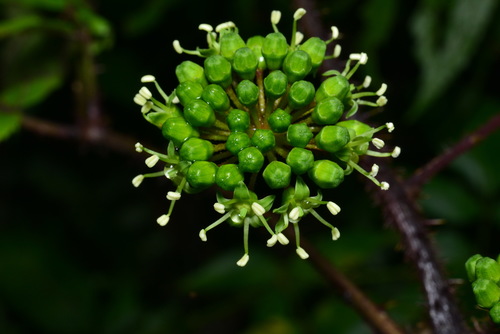
Cussonia corbisieri
De Wild.
AraliaceaeFruit
iNaturalist · cc-by-nc
(c) Nico Vromant, some rights reserved (CC BY-NC), uploaded by Nico Vromant
(c) Nico Vromant, some rights reserved (CC BY-NC), uploaded by Nico Vromant
iNaturalist · cc-by-nc
(c) Nico Vromant, some rights reserved (CC BY-NC), uploaded by Nico Vromant
(c) Nico Vromant, some rights reserved (CC BY-NC), uploaded by Nico Vromant

iNaturalist · cc-by-nc
(c) Mike Dikamba, some rights reserved (CC BY-NC)
(c) Mike Dikamba, some rights reserved (CC BY-NC)
What to Eat
Edible parts: Fruit
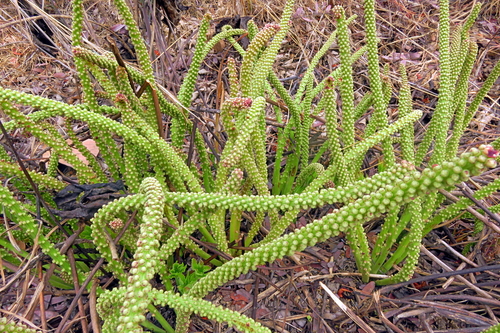
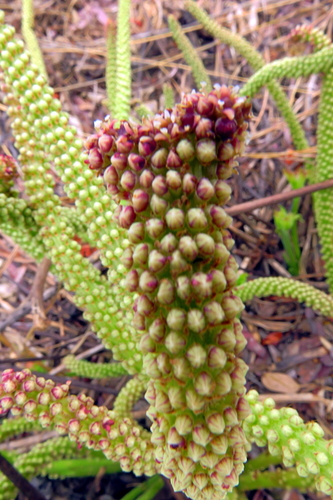
The oval fruits are edible.
Where to Find It
It is a tropical plant. It grows up to 2,000 m above sea level. It grows in seasonally dry areas.
Africa, Central Africa, Congo DR, East Africa, Zambia,
Countries: Angola, Burkina Faso, Burundi, Benin, Botswana, Congo (DRC), Central African Republic, Congo (Republic), Cote d'Ivoire, Cameroon, Cape Verde, Djibouti, Algeria, Egypt, Eritrea, Ethiopia, Gabon, Ghana, Gambia, Guinea, Equatorial Guinea, Guinea-Bissau, Kenya, Comoros, Liberia, Lesotho, Libya, Morocco, Madagascar, Mali, Mauritania, Mauritius, Malawi, Mozambique, Namibia, Niger, Nigeria, Rwanda, Seychelles, Sudan, Sierra Leone, Senegal, Somalia, South Sudan, Sao Tome & Principe, Eswatini, Chad, Togo, Tunisia, Tanzania, Uganda, South Africa, Zambia, Zimbabwe
How to Identify
A plant with a woody underground rootstock. It grows 1 m tall. The leaf stalk is 60 cm long. It grows from the centre of the rootstock. The leaves are 30 cm long by 30 cm wide. They are hairy when young. The leaves have 6 lobes. There are irregular teeth along the edge. The flowering shoot comes from the centre of the rootstock and has a group of spikes. The fruit is oval and 8-10 mm long by 6-8 mm wide. It has slight ribs along it.
Names & Synonyms
Dikasa-diatembo
Cussonia quarrei De Wild.
References (2)
- Brevard County Edible Acres
- Martin