Polygonum macrophyllum
D. Don
(c) T. Abe Lloyd, some rights reserved (CC BY-NC)
(c) T. Abe Lloyd, some rights reserved (CC BY-NC)
(c) T. Abe Lloyd, some rights reserved (CC BY-NC)
What to Eat
Edible parts: Root, Seeds
The roots are eaten fresh or crushed and eaten with barley or maize. The seeds are ground to make flour and are a significant food source.
Where to Find It
It is a temperate plant. In Sichuan. In Nepal it grows between 2,700-4,500 m above sea level.
Asia, Bhutan, China, Himalayas, India, Northeastern India, Sikkim, Tibet,
How to Identify
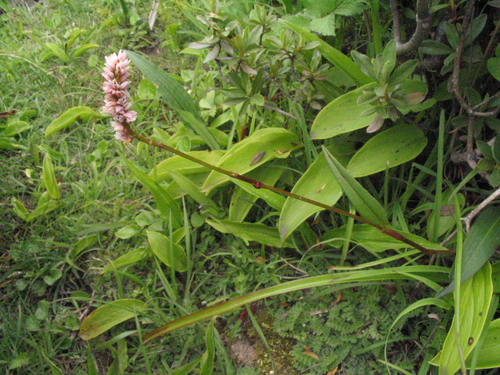
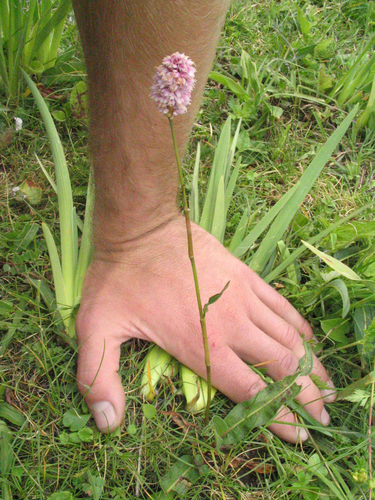
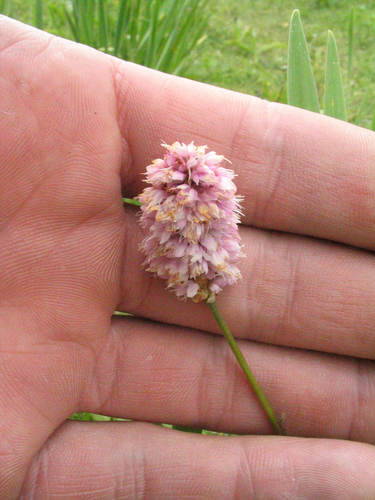
A small herb. It keeps growing from year to year. It has a thick fibrous rootstock. The stems are 10-15 cm tall. The leaves are oblong to sword shaped and have parallel sides. They are 3-12 cm long by 0.1-3 cm wide and the base is rounded or heart shaped. They are hairy underneath. The flowers are pink or red. They are in groups 2-7 cm long at the top of the plant.
Other Information
The seeds are a significant food.
Names & Synonyms
Ban jia lin bu, Rong bu, Spang ram
References (3)
- Boesi, A., 2014, Traditional knowledge of wild food plants in a few Tibetan communities. Journal of Ethnobiology and Ethnomedicine 10:75
- Chen, W., et al, 2021, Wild plants used by the Lhoba people in Douyu Village, characterized by high mountains and valleys, in southeastern Tibet, China. Journal of Ethnobiology and Ethnomedicine (2021) 17:46
- Guo, C., et al, 2022, An Ethnobotany Survey of Wild Plants Used by the Tibetan People of the Yadong River Valley, Tibet, China. Journal of Ethnobiology and Ethnomedicine p 27