Syagrus sancona
(Kunth) H. Karst.
Sumuque palm
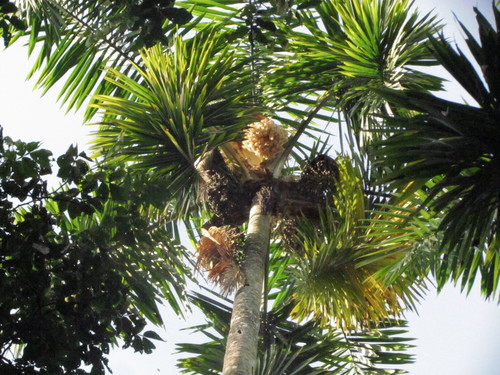
(c) Sebas Arango, some rights reserved (CC BY-NC), uploaded by Sebas Arango
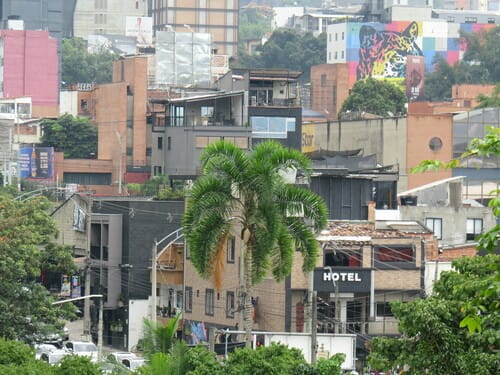
(c) Philippe Gravel, some rights reserved (CC BY-NC)
What to Eat
Edible parts: Fruit, Seed, Nut
The fruit and seeds are edible, though some references indicate the fruit may not be palatable.
Where to Find It
It is a tropical plant. It grows in the Amazon. It grows up to 1,200 m above sea level.
Amazon, Andes, Bolivia, Colombia, Ecuador, Peru, South America, Venezuela,
How to Identify
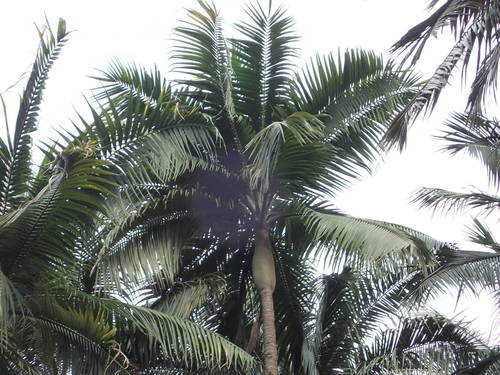
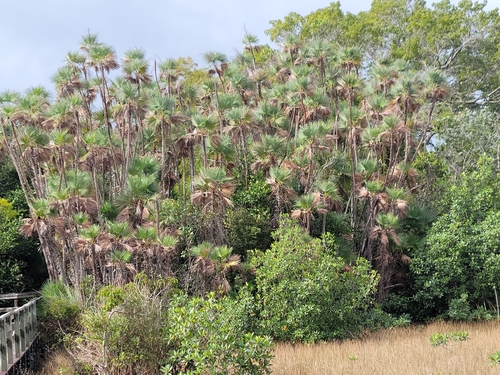
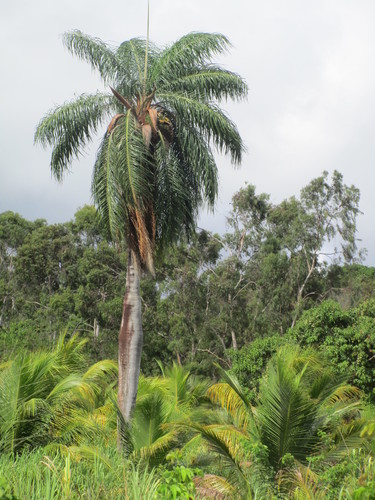
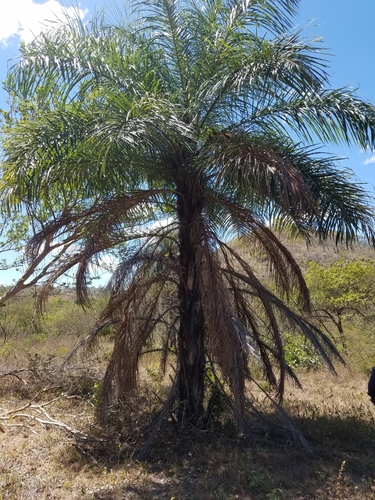
A solitary palm. It grows 7-30 m tall. The trunk is 20-30 cm across. The fruit are oval and 3 cm long by 2 cm wide. They are orange or yellow and fleshy.
How to Grow
Succeeds in the tropics and the subtropics, being able to tolerate occasional light frosts when temperatures fall to -2°c. The plant can take full sun from an early age. Extremely easy to grow in a wide variety of conditions, established plants are drought resistant.
Other Uses
The stems are used for fencing and as pipes for transporting water.
Wikipedia
Source ↗Syagrus sancona is a species of palm tree native to Bolivia, Venezuela, Colombia, Ecuador and Peru.
Names & Synonyms
References (5)
- Balee, W. L. et al (Ed.), 2006, Time and Complexity in Historical Ecology: Studies in the Neotropical Lowlands. Columbia University press.
- Lopez-Diago, D. & Garcia, N., 2021, Wild edible fruits of Colombia. Biota ColomBiana 22 (2) p 32
- Marcia, M. J., et al, 2011, Palm Uses in Northwestern South America: A Quantitative Review. Bot. Rev. (2011) 77:462-570
- Roa, J. A. G. & Boada, D. S. G., 2018, Fundación para el Fortalecimiento de la Fruticultura y Plantas Alimenticias no Convencionales en Colombia.
- World Checklist of Useful Plant Species 2020. Royal Botanic Gardens, Kew