Comarostaphylis discolor
(Hook.) Diggs
EricaceaeFruit
iNaturalist · cc-by-nc
(c) Joey Santore, some rights reserved (CC BY-NC), uploaded by Joey Santore
(c) Joey Santore, some rights reserved (CC BY-NC), uploaded by Joey Santore

iNaturalist · cc-by-nc
(c) Luis Vigosa, some rights reserved (CC BY-NC), uploaded by Luis Vigosa
(c) Luis Vigosa, some rights reserved (CC BY-NC), uploaded by Luis Vigosa
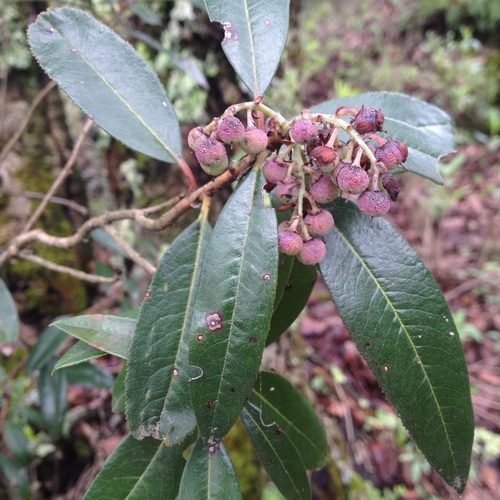
iNaturalist · cc-by-nc
(c) Bodo Nuñez Oberg, some rights reserved (CC BY-NC), uploaded by Bodo Nuñez Oberg
(c) Bodo Nuñez Oberg, some rights reserved (CC BY-NC), uploaded by Bodo Nuñez Oberg
What to Eat
Edible parts: Fruit
The ripe fruits are eaten.
Where to Find It
It is a tropical plant. It grows between 2,000-3,000 m above sea level.
Central America, Guatemala*, Mexico,
Countries: Belize, Costa Rica, Guatemala, Honduras, Mexico, Nicaragua, Panama, El Salvador
How to Identify
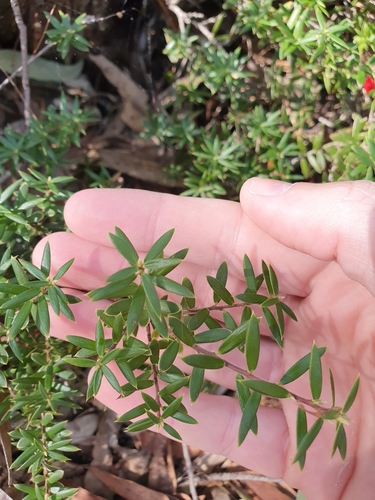
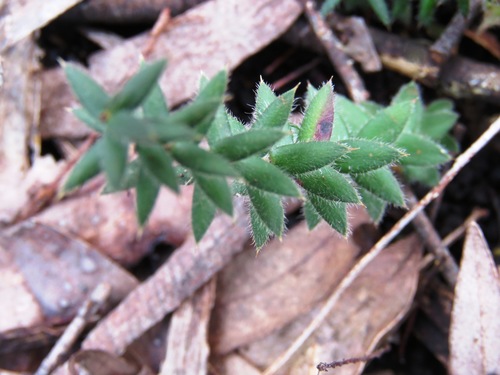
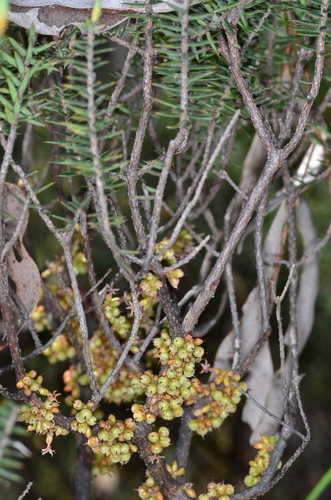
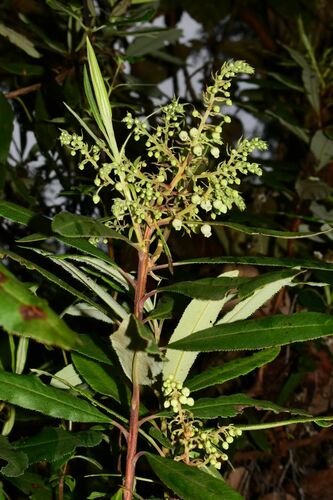
A shrub or small tree. It grows 1-10 m tall. The bark peels or flakes off. It is reddish brown. The leaves are narrowly oval and 4-15 cm long by 1-5 cm wide. There are teeth along the edge. The fruit are 6-8 mm across and red when young bur purple to black when ripe.
Names & Synonyms
Flor de mayo, Garambullo, Madrono borracho, Temezquite
Arbutus arguta Zucc. ex Steud.Arbutus coccinea Sesse & Moc.Arbutus discolor Hook.
Arctostaphylos arguta Zucc.Arctostaphylos discolor DC.Arctostaphylos nitida Benth.Comarostaphylis arguta Zucc.and others
References (3)
- Cruz, I. M., et al, 2015, Edible fruits and seeds in the State of Mexico. Revista Mexicana de Ciencias Agricolas. Vol. 6. Num. 2 pp 331-346
- Kermath, B. M., et al, 2014, Food Plants in the Americas: A survey of the domesticated, cultivated and wild plants used for Human food in North, Central and South America and the Caribbean. On line draft. p 255
- Segura, S., et al, 2018, The edible fruit species in Mexico. Genet Resour Crop Evol (2018) 65:1767–1793