Duguetia macrophylla
R. E. Fr.
Big leaf duguetia
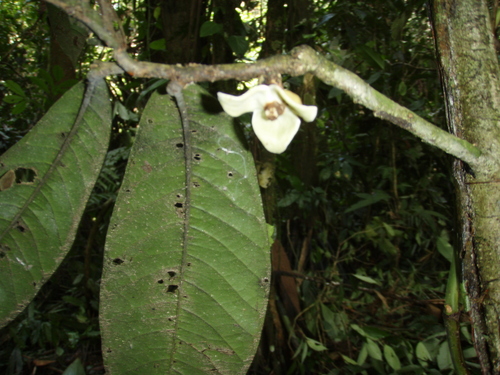
iNaturalist · cc-by-nc
(c) James G. Graham, some rights reserved (CC BY-NC), uploaded by James G. Graham
(c) James G. Graham, some rights reserved (CC BY-NC), uploaded by James G. Graham

gbif · cc-by-nc
C. Dennis : Field Museum of Natural History - Botany Department
C. Dennis : Field Museum of Natural History - Botany Department
What to Eat
Edible parts: Fruit
Fruit - raw. The globose to subglobose, yellow fruit is 30 - 70mm long and 35 - 60mm in diameter, comprising 70 - 100 or more fertile carpels each around 15 - 25mm long and 5 - 12mm in diameter.
Known Hazards
Where to Find It
It is a tropical plant.
Amazon, Bolivia, Brazil, Colombia, Ecuador*, Guyana, Peru, South America, Venezuela,
How to Identify
A small tropical tree of the Annonaceae family.
How to Grow
Plants can flower and produce fruit all year round.
Medicinal Uses
The bark is used in a medicinal balm. A tea made from the scrapings of the inner barkis used to relieve body, stomach and chest pains.
Other Uses
The wood can be used as timber.
Names & Synonyms
Anon, Chirimoyo, Juumyba, Majagua, Majagua dura, Majagua hoja fina, Majagua negra, Tortuga caspi
Duguetia spruceana R. E. Fr.
References (6)
- Grandtner, M. M. & Chevrette, J., 2013, Dictionary of Trees, Volume 2: South America: Nomenclature, Taxonomy and Ecology. Academic Press p 209
- Kermath, B. M., et al, 2014, Food Plants in the Americas: A survey of the domesticated, cultivated and wild plants used for Human food in North, Central and South America and the Caribbean. On line draft. p 322
- Kew Plants of the World onLine
- Roa, J. A. G. & Boada, D. S. G., 2018, Fundación para el Fortalecimiento de la Fruticultura y Plantas Alimenticias no Convencionales en Colombia.
- Torre, de la L., et al, 2008, Enciclopedia de las Plantas Útiles del Ecuador. Herbario QCA. Pontificia Universidad Católica del Ecuador. p 164
- Vasquez, R. and Gentry, A. H., 1989, Use and Misuse of Forest-harvested Fruits in the Iquitos Area. Conservation Biology 3(4): 350f


