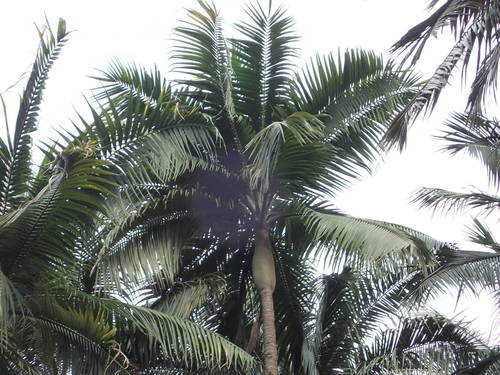
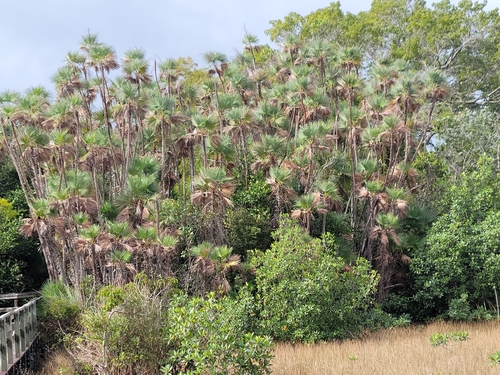
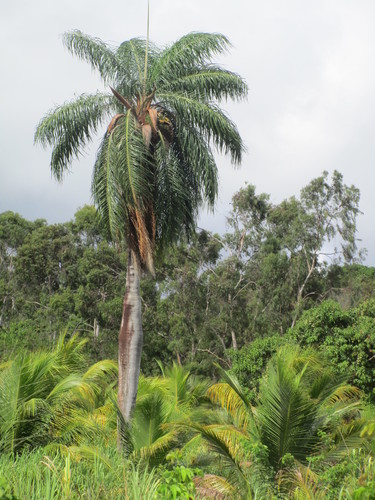
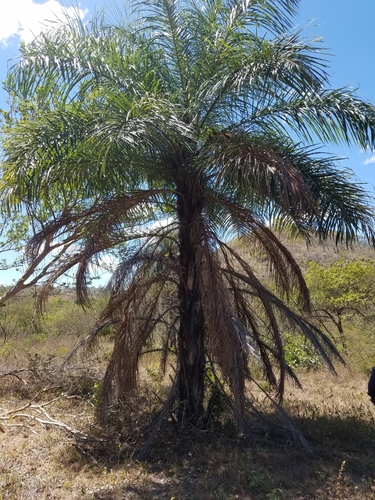
Gaussia maya
(O. F. Cook) H. J. Quero & Read
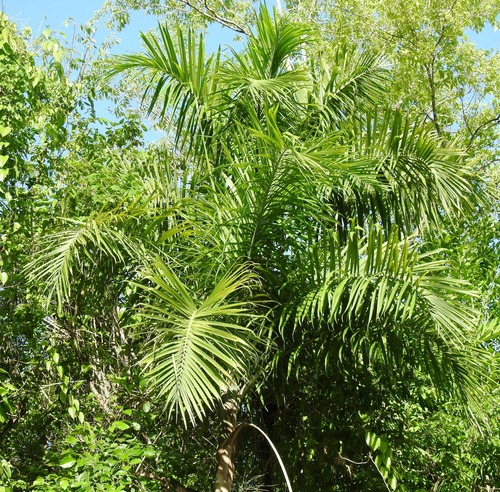
(c) Jan Meerman, some rights reserved (CC BY-NC), uploaded by Jan Meerman

(c) anonymous, some rights reserved (CC BY-SA)
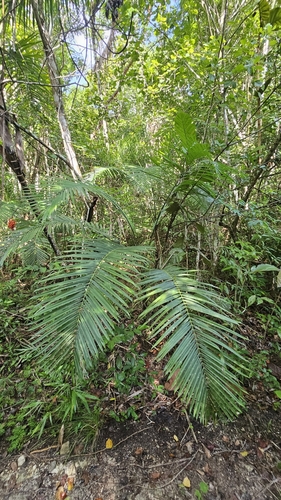
(c) Roni Martinez, some rights reserved (CC BY-NC), uploaded by Roni Martinez
Where to Find It
It is a tropical plant.
Belize, Central America, Guatemala, Mexico,
How to Identify
A palm.
How to Grow
Plants can tolerate occasional short-lived frosts with temperatures falling to around -2°c. The plant likes a shady position in a moist but well drained soil when it is young, but it can take more sun as it grows. The plant often flowers very freely, this can result in up to a dozen inflorescences being on a plant at any one time. Plants have a moderate rate of growth.
Propagation: Seed - it takes 2 months to germinate.
Other Uses
The stems are very durable. They are used in construction.
Wikipedia
Source ↗Gaussia maya is a palm which is native to Mexico, Belize and Guatemala. The species grows in rocky areas on limestone soils. The species is classified as vulnerable, and is threatened by habitat destruction and degradation. Gaussia maya are 5 to 20 metres tall. Stems are gray, 10 to 15 (sometimes 30) centimetres in diameter. Trees have six to eight pinnately compound leaves. Fruit are red, 1 to 1.5 cm in diameter. Stems are used for construction.
Names & Synonyms
Cambo, Pacaya, Palma cimarrona, Palmasito
References (1)
- Kermath, B. M., et al, 2014, Food Plants in the Americas: A survey of the domesticated, cultivated and wild plants used for Human food in North, Central and South America and the Caribbean. On line draft. p 385