Geonoma deversa
(Poit.) Kunth
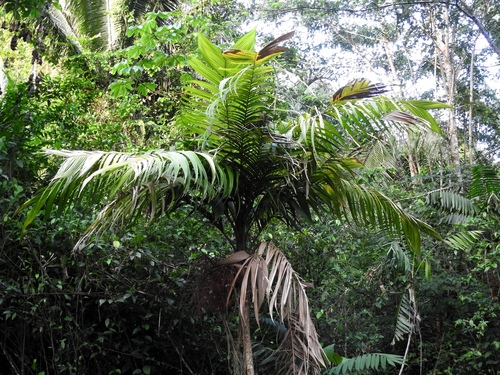
(c) Jan Meerman, some rights reserved (CC BY-NC), uploaded by Jan Meerman
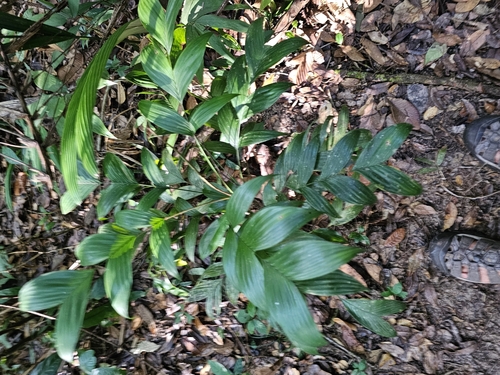
(c) Wim.Jacobs, some rights reserved (CC BY-NC)
What to Eat
Edible parts: Plant - salt
In South America, the leaves of species such as Geonoma deversa, Geonoma orbignyana, and Geonoma macrostachys are economically important for their use in thatching roofs.
Where to Find It
It is a tropical plant. It grows from sea level to 500 m above sea level.
Amazon, Belize, Bolivia, Brazil, Central America, Colombia, Costa Rica, Ecuador, French Guiana, Guianas, Guatemala, Guyanas, Honduras, Nicaragua, Panama, Peru, South America, Suriname, Venezuela,
How to Identify
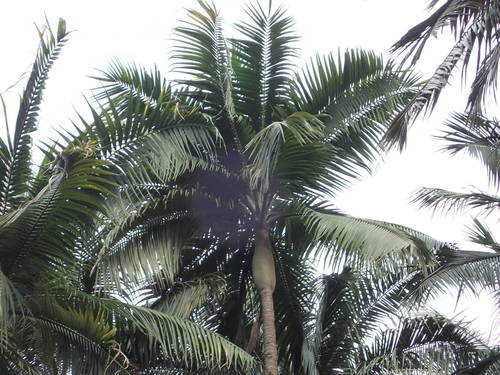
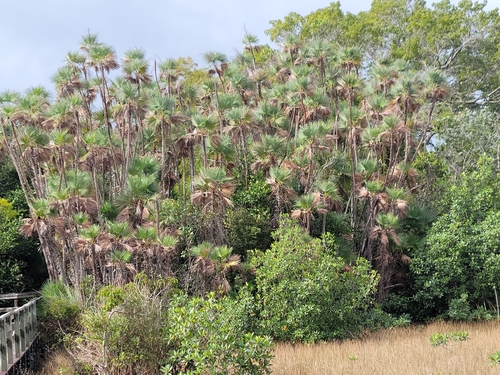
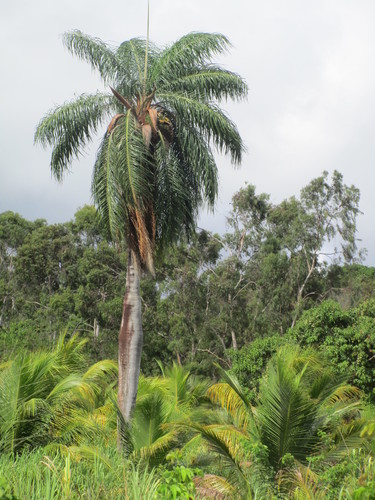
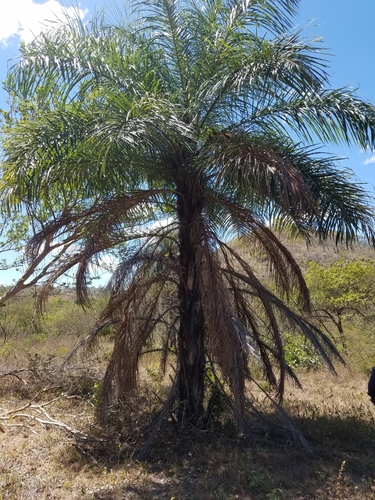
A palm that forms clumps. The stems can be 2-5 m tall. They are 1-3 cm wide. The leaf stalks are 10-46 cm long. The leaves have leaflets. They are 30-90 cm long with 2-30 leaflets on each side. The fruit are 0.5-0.7 cm long.
Other Uses
The leaves are commonly used as a thatch.
Names & Synonyms
Baruaru, Chontillo, Jatata, Ubim-bravo, Ubim-juriti
References (4)
- Grayum, M. H., 2000, MBG: Research: Manual de Plantas de Costa Rica: Draft Treatments p 6
- Kew Plants of the World Online
- Kermath, B. M., et al, 2014, Food Plants in the Americas: A survey of the domesticated, cultivated and wild plants used for Human food in North, Central and South America and the Caribbean. On line draft. p 388
- Roa, J. A. G. & Boada, D. S. G., 2018, Fundación para el Fortalecimiento de la Fruticultura y Plantas Alimenticias no Convencionales en Colombia.