Leopoldinia pulchra
Mart.

iNaturalist · cc-by-nc
(c) Nelson Wisnik, some rights reserved (CC BY-NC), uploaded by Nelson Wisnik
(c) Nelson Wisnik, some rights reserved (CC BY-NC), uploaded by Nelson Wisnik
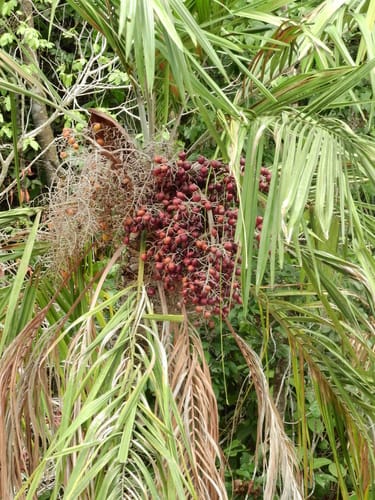
iNaturalist · cc-by-nc
(c) Nelson Wisnik, some rights reserved (CC BY-NC)
(c) Nelson Wisnik, some rights reserved (CC BY-NC)
What to Eat
Edible parts: Fruit sap
An ash made from the fruits is used as a salt substitute. Local people sometimes collect the fruit in large quantities, then by burning and washing it extract a floury substance, which is used as a substitute for salt when that substance is not available. It is more bitter than saline in flavour.
Where to Find It
It is a tropical plant.
Amazon, Brazil, Colombia, South America, Venezuela,
How to Identify
A tropical palm of the Arecaceae family.
Medicinal Uses
The ash from the burned fruits is applied directly to the site of injury as a treatment for curare poisoning.
Names & Synonyms
Cucurito, Jara, Yara
References (3)
- Kermath, B. M., et al, 2014, Food Plants in the Americas: A survey of the domesticated, cultivated and wild plants used for Human food in North, Central and South America and the Caribbean. On line draft. p 480
- Lopez-Diago, D. & Garcia, N., 2021, Wild edible fruits of Colombia. Biota ColomBiana 22 (2) p 32
- Roa, J. A. G. & Boada, D. S. G., 2018, Fundación para el Fortalecimiento de la Fruticultura y Plantas Alimenticias no Convencionales en Colombia.