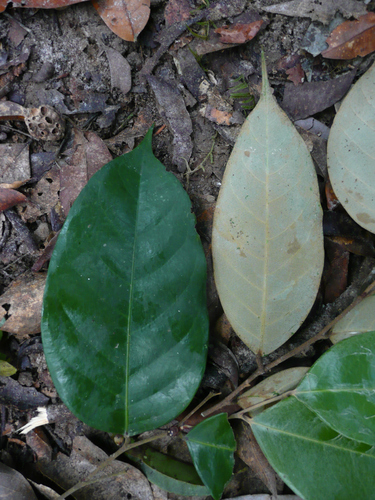
Licania oblongifolia
Standl.

gbif · cc-by-nc
Field Museum of Natural History - Botany Department | GDI 2013-2015
Field Museum of Natural History - Botany Department | GDI 2013-2015

gbif · cc-by-nc
Field Museum of Natural History - Botany Department | GDI 2013-2015
Field Museum of Natural History - Botany Department | GDI 2013-2015
What to Eat
Edible parts: Fruit
The fruit are eaten.
Known Hazards
Where to Find It
It is a tropical plant.
Amazon, Bolivia, Brazil, Peru, South America, Venezuela,
How to Identify
A tropical tree in the Chrysobalanaceae family with edible fruit.
Other Uses
The heartwood is light brown; the sapwood is pink. The texture is medium; grain straight to interlocked; lustre is medium; there is no distinctive taste or aoma. The wood is not very durable. It is easy to work and finishes well. It is used for flooring, construction etc.
Names & Synonyms
Macucu-chiador
References (2)
- Grandtner, M. M. & Chevrette, J., 2013, Dictionary of Trees, Volume 2: South America: Nomenclature, Taxonomy and Ecology. Academic Press p 352
- Kermath, B. M., et al, 2014, Food Plants in the Americas: A survey of the domesticated, cultivated and wild plants used for Human food in North, Central and South America and the Caribbean. On line draft. p 487