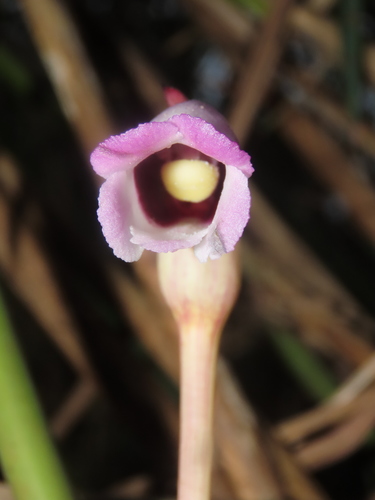
Cistanche violacea
(Desf.)G.Beck.
Violet cistanche

(c) Sébastien SANT, some rights reserved (CC BY-NC), uploaded by Sébastien SANT
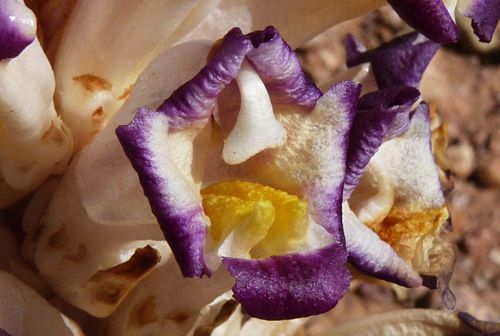
(c) lougarou, some rights reserved (CC BY-NC), uploaded by lougarou

(c) Zsombor Károlyi, some rights reserved (CC BY-NC), uploaded by Zsombor Károlyi
What to Eat
Edible parts: Root, Bulb
The fleshy roots are eaten raw.
Where to Find It
A Mediterranean plant.
Africa, Libya, Mediterranean, Middle East, North Africa, Sahara, Saudi Arabia,
How to Identify
A parasitic plant in the broomrape family that grows attached to the roots of other plants, found in Mediterranean regions.
Medicinal Uses
Along with other members of the genus, Cistanche deserticola is the primary source of the Chinese herbal medicine cistanche (Chinese: 肉苁蓉, pinyin ròucōngróng). The main sources of cistanche are Cistanche salsa and Cistanche deserticola, although it may also be obtained from Cistanche tubulosa, Cistanche sinensis, and Cistanche ambigua. The drug, known in Chinese as suosuo dayun, is collected in spring before sprouting, by slicing the stems of the plant. Cistanche deserticola has been placed on CITES Appendix 2, a list of endangered species not banned from trade but requiring monitoring. With increased consumption of cistanche, the population of the species has decreased and its area of distribution has shrunk. Aside from over-collection or indiscriminate collection, an important factor in the diminished supply of cistanche is a loss of the host, Haloxylon ammodendron, which is widely used for firewood.
Notes
It is used in medicine due to its antioxidant
References (2)
- Debouba, M., Antioxidant capacity and total phenols richness of Cistanche violacea hosting Zygophyllum album. www.arjournals.org
- Mahklouf, M. H., 2019, Ethnobotanical Study of Edible Wild Plants in Libya. European Journal of Ecology. 5(2): 30-40