Polyalthia korinti
(Dunal) Thwaites
AnnonaceaeFruit

iNaturalist · cc-by-nc
(c) Michael and Nancy van der Poorten, some rights reserved (CC BY-NC), uploaded by Michael and Nancy van der Poorten
(c) Michael and Nancy van der Poorten, some rights reserved (CC BY-NC), uploaded by Michael and Nancy van der Poorten

iNaturalist · cc-by-sa
(c) Rohit, some rights reserved (CC BY-SA), uploaded by Rohit
(c) Rohit, some rights reserved (CC BY-SA), uploaded by Rohit
iNaturalist · cc-by-nc
(c) Michael and Nancy van der Poorten, some rights reserved (CC BY-NC), uploaded by Michael and Nancy van der Poorten
(c) Michael and Nancy van der Poorten, some rights reserved (CC BY-NC), uploaded by Michael and Nancy van der Poorten
What to Eat
Edible parts: Fruit
Its fruits are edible.
Where to Find It
It is a tropical plant. It grows in river forests and mangroves.
Asia, Sri Lanka,
Countries: United Arab Emirates, Afghanistan, Armenia, Azerbaijan, Bangladesh, Bahrain, Brunei, Bhutan, China, Georgia, Indonesia, Israel, India, Iraq, Iran, Jordan, Japan, Kyrgyzstan, Cambodia, North Korea, South Korea, Kuwait, Kazakhstan, Laos, Lebanon, Sri Lanka, Myanmar, Mongolia, Maldives, Malaysia, Nepal, Oman, Philippines, Pakistan, Qatar, Saudi Arabia, Singapore, Syria, Thailand, Tajikistan, Timor-Leste, Turkmenistan, Turkey, Taiwan, Uzbekistan, Vietnam, Yemen
How to Identify
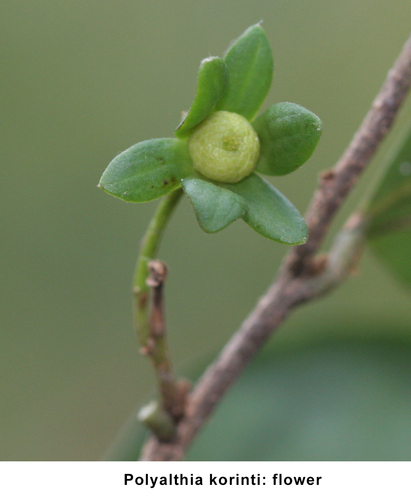
A small tree. It grows 5 m tall. Young branches are yellow and hairy. The leaves are oval or sword shaped. The flowers are green and occur singly or in pairs. They can be in the axils of leaves or on woody lumps on the branches. The fruit are succulent, round and bright red.
Names & Synonyms
Ul kenda, Uluvintai
Guatteria korinti DunalUnona corinthi Baill.
References (1)
- Ashton, M. S., et al 1997, A Field Guide to the Common Trees and Shrubs of Sri Lanka. WHT Publications Ltd. p 104


