Cola acuminata
(P. Beauv.) Schott et Endl.
Cola nut

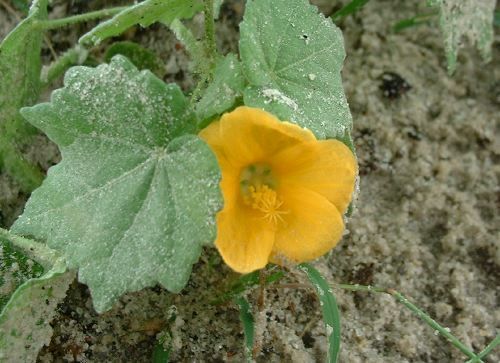
(c) Scamperdale, some rights reserved (CC BY-NC)

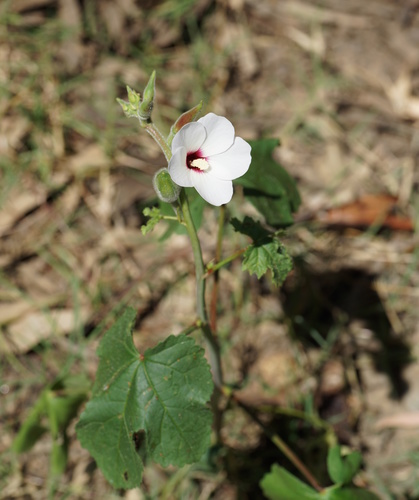
(c) Galo Chiriboga J, some rights reserved (CC BY-NC), uploaded by Galo Chiriboga J

(c) mwintirew, some rights reserved (CC BY-NC)
What to Eat
Edible parts: Seeds, Nut, Herb, Flavouring, Fruit, Leaves
The aromatic seeds are rich in caffeine, containing 1.25–2.4% caffeine, and act as a stimulant. They can be chewed or ground into a powder and made into a drink to give energy, increase alertness, retard hunger and fatigue, aid digestion and increase stamina. When whole nuts are chewed, they taste bitter at first but leave a sweet aftertaste that modifies the flavour of other foods or drinks consumed afterwards — chewing cola nuts before drinking water makes the water taste sweeter. The bitter seeds are especially valued by Muslims in the drier regions of West Africa, particularly during Ramadan. The nuts are used in non-alcoholic soft drinks such as Coca-Cola, and an extract from the dried kernels is used to flavour carbonated drinks, ice cream, candy and baked goods. The kernels can be red, white or pink; the red kernels can be used as a natural food colourant.
Where to Find It
It is a tropical plant. It suits the hot wet tropical lowlands. It will grow in sun or part shade. It is damaged by frost. It is best in fertile soil that are well-drained. It is native to West Africa. It suits hardiness zones 11-12. It cannot tolerate high pH.
Africa, Angola, Asia, Australia, Benin, Brazil, Cameroon, Central Africa, Central African Republic, CAR, Central America, Colombia, Congo DR, Congo R, Cuba, Dominican Republic, East Africa, Equatorial-Guinea, Gabon, Grenada, Haiti, India, Indonesia, Nigeria, Sao Tome and Principe, SE Asia, Sierra Leone, South America, Sri Lanka, Togo, Venezuela, West Africa*, West Indies, Zambia,
How to Identify
A medium sized tree. It grows 13-20 m tall. In cultivation it is usually 6-9 m high. It commonly has low branches. The bark is dark green or grey. The small branches are smooth. The leaves are near the tip of the branches. They are 7-22 cm long by 2-8 cm wide. The tip is usually twisted downwards. The leaves are leathery and dark green. The flowers are in irregular branched clusters. They are white or cream with red inside. The fruit has a rough, mottled skin. They are made up of 5 cells. The fruit can be 20 cm long and 6 cm wide. They occur singly. It has thin white flesh. The seeds are large, flat and bright red. There are up to 14 seeds. When the seed coat is removed the seeds split into four pieces.
Nutrition Score: 53/100
| Part | Moisture | kJ | kcal | Protein | Vit A | Vit C | Iron | Zinc |
|---|---|---|---|---|---|---|---|---|
| Seed | 11.8 | 955 | 228 | 6.3 | — | — | 6 | — |
How to Grow
Plants are usually grown from seeds. Seed only remain viable for about 2 weeks. Cuttings can be used. Plants can also be grown using layering. Plants can be budded. For seeds, the pods are put in a heap and kept damp for 16 days and then the seed coat removed and the seed planted 10 cm deep.
Propagation: Sow seeds individually in containers. Seedlings are sometimes raised in pots or polythene bags before planting out. Ripe fruits should be harvested before the follicles split open; seeds are extracted from the follicles and the white aril removed after 5 days of fermentation. Nuts intended for planting should be mature ones that have undergone after-ripening. Propagation is also possible by cuttings of mature wood or aerial layering.
Medicinal Uses
Cola nuts contain up to 2.5% caffeine along with theobromine, tannins, phlobaphene and an anthocyanin. They stimulate the nervous system when chewed and are considered a digestive tonic, diuretic, astringent and antidepressant. They counteract overstrain and depression, improving both physical and mental state. The primary active principle is caffeine, with theobromine and kolatine as additional active compounds. Due to its astringent properties, cola is used as a non-addictive stimulant in the treatment of diarrhoea and dysentery, and to prevent vomiting in cases of high fever. It has been used in treating headaches and migraine. In combination with coca leaf (Erythroxylum coca) it has been used to produce a stimulant drug sold as 'Forced March' tablets for use by explorers and military expeditions. Crushed nuts are boiled with the leaves of Morinda lucida and the liquid taken internally to treat piles. Nuts ground to a fine paste with the leaves of Scoparia dulce are dissolved in a little water and a few drops given orally to babies for headache. Seeds are harvested when fully ripe and dried in the sun. An infusion of the bark mixed with ginger and a little pepper is taken internally to treat stomach ulcers.
Other Uses
The seed is reputed to act as a water purifier. The sapwood is pinkish-white and the heartwood dull yellow. The wood is suitable for furniture, house and boat building, coach-work, plates, domestic utensils, gun stocks, joinery and carvings. It is also a good fuel source.
Wikipedia
Source ↗Cola acuminata is a species in the genus Cola, of the family Malvaceae, native to tropical Africa. It is generally known for its fruit, the kola nut, chewed as a source of caffeine in West Africa and used to impart the cola flavour in manufactured beverages such as Coca-Cola.
Production
Trees will bear in 7-10 years from seed. They can continue bearing for 100 years. In Central African Republic flowers have been recorded in February, May and August and fruit in June.
Other Information
The seeds contain caffeine and theobromine. It is sold in local markets.
Notes
There are about 125 Cola species. The seeds are rich in caffeine. Also put in the family Sterculiaceae. In Botanical Gardens in Slovenia presumably in a hot house.
Names & Synonyms
Abata-kola, Angbonbole, Angbongbolia, Angbongo, Caffeine nut, Eme, Gbongbole, Gbongbolia, Gooranut, Gorra, Ibal, Ibong, Kola nut, Korra, Lebe, Libel, Lielu, Ligo, Liko, Liyelu, Makanzu, Moko, Ndigo, Ndigose, Noz-de-cola, Obi abata, Obi-igala, Oji, Oji awusa, Pohon kola manis, Ribey, Sombou, Tamtsi
References (58)
- Ambasta, S.P. (Ed.), 2000, The Useful Plants of India. CSIR India. p 136
- Aniama, S. O., et al, 2016, Ethnobotanical documentaton of some plants among Igala people of Kogi State (Nigeria). The International Journal Of Engineering And Science (IJES). 5(4) pp 33-42
- Asogwa E. U., Anikwe J. C. and Mokwunye F.C., 2006, Kola production and utilization for economic development. African Scientist, vol. 7, no. 4, pp. 217–220.
- Barwick, M., 2004, Tropical and Subtropical Trees. A Worldwide Encyclopedic Guide. Thames and Hudson p 126
- Billong Fils, P. E., et al, 2020, Ethnobotanical survey of wild edible plants used by Baka people in southeastern Cameroon. Journal or Ethnobiology and Ethnomedicine. 16:64 p 7
- Bodkin, F., 1991, Encyclopedia Botanica. Cornstalk publishing, p 271
- Bremness, L., 1994, Herbs. Collins Eyewitness Handbooks. Harper Collins. p 50
- Brown, D., 2002, The Royal Horticultural Society encyclopedia of Herbs and their uses. DK Books. p 175
- Burkill, H. M., 1985, The useful plants of west tropical Africa, Vol. 4. Kew.
- Dalziel, J. M., 1937, The Useful plants of west tropical Africa. Crown Agents for the Colonies London.
- Danforth, R.M., & Boren, P.D., 1997, Congo Native fruits. Twenty-five of the best. Privately published. p 49
- Dibong, S. D., et al, 2011, Inventory and Biodiversity of species edible wild fruits sold in the markets of Douala, Cameroon. International Journal of Applied Biology and Pharmaceutical Technology. 2(3).
- Eijnatten van, C.L.M., 1979, Kola, in Simmonds, N.W., (ed), Crop Plant Evolution. Longmans. London. p 284
- Etherington, K., & Imwold, D., (Eds), 2001, Botanica's Trees & Shrubs. The illustrated A-Z of over 8500 trees and shrubs. Random House, Australia. p 220
- Facciola, S., 1998, Cornucopia 2: a Source Book of Edible Plants. Kampong Publications, p 238
- FAO Corporate Document Repository. The Major Significance of 'Minor' Forest Products. Appendix 3
- Fongnzossie Fedoung, E., et al, 2020, Wild edible plants and mushrooms of the Bamenda Highlands in Cameroon: ethnobotanical assessment and potentials for enhancing food security. Journal of Ethnobiology and Ethnomedicine 16:12
- Fowler, D. G., 2007, Zambian Plants: Their Vernacular Names and Uses. Kew. p 82
- Gallois, S., et al, 2020, Methodological priorities in assessing wild edible plant knowledge and use – a case study among the Baka in Cameroon.
- Gohre, A., et al, 2016, Plants from disturbed savannah vegetation and their usage by Bakongo tribes in Uíge, Northern Angola. Journal of Ethnobiology and Ethnomedicine (2016) 12:42
- Hedrick, U.P., 1919, (Ed.), Sturtevant's edible plants of the world. p 210
- Heywood, V.H., Brummitt, R.K., Culham, A., and Seberg, O., 2007, Flowering Plant Families of the World. Royal Botanical Gardens, Kew. p 311
- Hoare A. L., 2007, The Use of Non-timber Forest Products in the Congo Basin. Constraints and Opportunities. Rainforest Foundation. p 11
- Jardin, C., 1970, List of Foods Used In Africa, FAO Nutrition Information Document Series No 2.p 33
- Keay, R.W.J., 1989, Trees of Nigeria. Clarendon Press, Oxford. p 136
- Kiple, K.F. & Ornelas, K.C., (eds), 2000, The Cambridge World History of Food. CUP p 1797
- Kuhnlein, H. V., et al, 2009, Indigenous Peoples' food systems. FAO Rome p 260
- Kybal, J., 1980, Herbs and Spices, A Hamlyn Colour Guide, Hamlyn Sydney p 80
- Latham, P., 2004, Useful Plants of Bas-Congo province. Salvation Army & DFID p 82
- Liengola, I. B., 2001, A contribution to the study of native edible plants by the Turumbu and Lokele of the Tshopo District, Province Orientale, D. R. Congo. Syst. Geogr. Pl. 71:687-698
- Lorenzi, H., Bacher, L., Lacerda, M. & Sartori, S., 2006, Brazilian Fruits & Cultivated Exotics. Sao Paulo, Instituto Plantarum de Estuados da Flora Ltda. p 431
- Martin, F. W., et al, 1987, Perennial Edible Fruits of the Tropics. USDA Handbook 642 p 63
- Mawunu, M., et al, 2020, First Survey of the Edible Non-Wood Forest Products Sold in Uige Province, Northern Angola. European Journal of Agriculture and Food Sciences. Vol. 2, No. 6
- Melet. bot. 33. 1832
- Menninger, E.A., 1977, Edible Nuts of the World. Horticultural Books. Florida p 40
- Meregini, O. A., 2005, Some endangered plants producing edible fruits and seeds in Southeastern Nigeria. Fruits, Vol. 60 pp 211-220
- Mosango M., Szafranski F., 1985, Plantes sauvages à fruits comestibles dans les environs de Kisangani (Zaïre). In: Journal d'agriculture traditionnelle et de botanique appliquée, 32e année, pp. 177-190
- Nkeoua, G. & Boundzanga, G. C., 1999, Donnees sur les produits forestieres non ligneux en Republique du Congo. FAO. p 22
- Plants of Haiti Smithsonian Institute http://botany.si.edu/antilles/West Indies
- PROSEA (Plant Resources of South East Asia) handbook, Volume 16, 2000, Stimulants.
- Purseglove, J.W., 1968, Tropical Crops Dicotyledons, Longmans. p 565
- Russell, T., Cutler, C., & Walters, M., 2005, The Illustrated Encyclopedia of Trees of the Americas. Lorenz Books. p 201
- Small, E., 2009, Top 100 Food Plants. The world's most important culinary crops. NRC Research Press. p 219
- Sneyd, L. Q., 2013. Wild Food, Prices, Diets and Development: Sustainability and Food Security in Urban Cameroon. Sustainability 2013, 5, 4728-4759
- Sukarya, D. G., (Ed.) 2013, 3,500 Plant Species of the Botanic Gardens of Indonesia. LIPI p 206
- Tanno, T., 1981, Plant Utilization of the Mbuti Pygmies: With Special reference to their Material Culture and Use of Wild Vegetable Foods. Kyoto University Research. African Study Monographs 1:1-53
- Terashima, H., & Ichikawa, M., 2003, A comparative ethnobotany of the Mbuti and Efe hunter-gatherers in the Ituri Forest, Democratic Republic of Congo. African Study Monographs, 24 (1, 2): 1-168, March 2003
- Termote, C., et al, 2011, Eating from the wild: Turumbu, Mbole and Bali traditional knowledge of non-cultivated edible plants, District Tshopo, DRCongo, Gen Resourc Crop Evol. 58:585-618
- Termote, C., et al, 2012, Wild Edible Plant Markets in Kisangani, Democratic Republic of Congo. Human Ecology 40:269-285
- Unwin, A. H., 1920, West African Forests and Forestry. Fisher Unwin Ltd. pdf on Internet p 89
- van Wyk, B., 2005, Food Plants of the World. An illustrated guide. Timber press. p 149
- Vickery, M.L. and Vickery, B., 1979, Plant Products of Tropical Africa, Macmillan. p 90
- Vivien, J., & Faure, J.J., 1996, Fruitiers Sauvages d'Afrique. Especes du Cameroun. CTA p 335
- Wickens, G.E., 1995, Edible Nuts. FAO Non-wood forest products. FAO, Rome. p154
- Wiersema, J. H. & Leon, B., 2013, World Economic Plants. A Standard Reference CRC Press. 2nd Ed. p 190
- Williams, C.N., Chew, W.Y., and Rajartnam, J.A., 1989, Tree and Field Crops of the Wetter Regions of the Tropics. Longman, p 81
- World Checklist of Useful Plant Species 2020. Royal Botanic Gardens, Kew
- Zapfack, L., et al, 2001, Ethnobotanical Survey of the Takamanda Forest Reserve. Consultancy Report PROFA, Cameroon. p 23