Chlamydocola chlamydantha
(K. Schum.) Bodard;

(c) Carel Jongkind, some rights reserved (CC BY-NC)

(c) Carel Jongkind, some rights reserved (CC BY-NC)
(c) Carel Jongkind, some rights reserved (CC BY-NC)
What to Eat
Edible parts: Fruit pulp, Seeds, Vegetable
The sweet and sour fruit pulp is eaten. The seeds are chewed as a substitute for Cola nuts, though they are considered inferior.
Where to Find It
A tropical plant. It grows in deciduous and evergreen forest. It is often in humid areas.
Africa, Benin, Cameroon, Central Africa, Central African Republic, CAR, Congo, Côte d'Ivoire, Equatorial-Guinea, Gabon, Ghana, Guinea, Guinée, Ivory Coast, Liberia, Nigeria, Sierra Leone, Togo, West Africa,
How to Identify
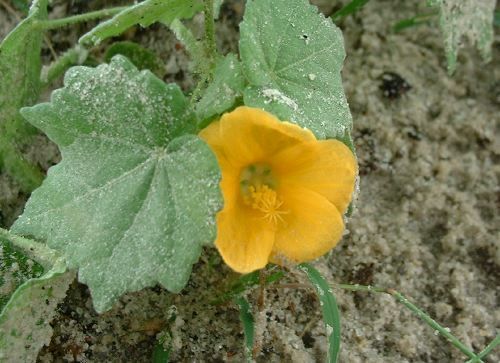
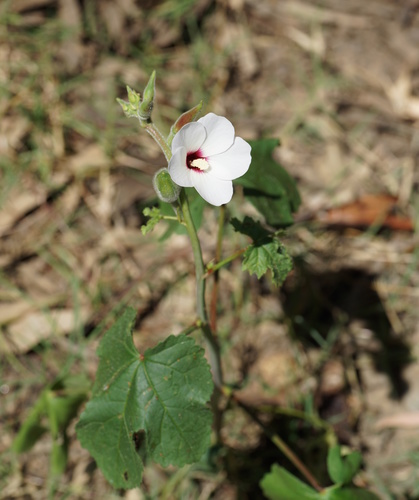
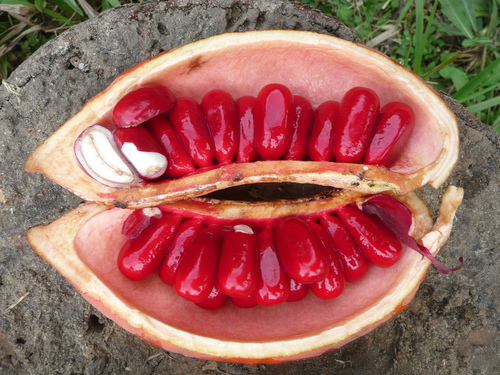
A tree. It grows up to 20 m high. The trunk is straight and 30 cm across. The outer bark is brown and flaking. The leaves are alternate and near the ends of branches. They are compound with 5-10 leaflets spread out like fingers on a hand. The leaf stalk is 10-80 cm long. The leaflets can be 60 cm long by 20 cm wide. They are wedge shaped at the base and taper to the tip. The flowers can be of one or both sexes. The flower tube is grey outside and red or purple inside. The fruit is made up of 9-12 dry fruit sections in a ring. They are curved and 6-15 cm long by 3-6 cm wide. They contain 7-25 seeds. The seeds are flattened and 2-3 cm long by about 1 cm wide. They are bright red.
How to Grow
The flowers are produced on the trunk and other stems. The tree responds well to coppicing.
Medicinal Uses
Decoctions of the bark are taken to calm intestinal pain, and against cough. The colourless liquid from the fruit cavity is used to treat eye inflammation.
Other Uses
The liquid from the fruit cavity has been shown to inhibit seed germination in all species tested. The heartwood is yellowish brown; the sapwood greyish. The texture is coarse. The wood is rather hard and heavy. The wood is used for pestles, house construction. The wood is used for fuel. Chlamydocola chlamydantha is a host tree of Cacao Swollen Shoot Virus (CSSV) causing swollen shoot disease in cocoa, a disease which has had a devastating effect on cocoa production in Ghana and neighbouring countries. Control of this disease in cocoa includes elimination of Chlamydocola chlamydantha from the vicinity.
Production
The tree should not be grown near cacao as it helps spread Cacao Swollen Shoot virus.
Notes
Also put in the family Sterculiaceae.
Names & Synonyms
Akom ngwe, Ngolo-ngolo
References (6)
- Brink, M., 2007. Chlamydocola chlamydantha (K.Schum.) M.Bodard. [Internet] Record from Protabase. Louppe, D., Oteng-Amoako, A.A. & Brink, M. (Editors). PROTA (Plant Resources of Tropical Africa), Wageningen, Netherlands. < http://database.prota.org/search.htm>. Accessed 14 October 2009.
- Burkill, H. M., 1985, The useful plants of west tropical Africa, Vol. 5. Kew.
- Grubben, G. J. H. and Denton, O. A. (eds), 2004, Plant Resources of Tropical Africa 2. Vegetables. PROTA, Wageningen, Netherlands. p 560
- Jardin, C., 1970, List of Foods Used In Africa, FAO Nutrition Information Document Series No 2.p 129
- Keay, R.W.J., 1989, Trees of Nigeria. Clarendon Press, Oxford. p 132 liberianfaunaflora.org Plant Atlas (As Cola chlamydantha)
- Vivien, J., & Faure, J.J., 1996, Fruitiers Sauvages d'Afrique. Especes du Cameroun. CTA p 335