Styrax camporum
Pohl
Cananhema

(c) Rich Hoyer, some rights reserved (CC BY-NC-SA), uploaded by Rich Hoyer

(c) Rich Hoyer, some rights reserved (CC BY-NC-SA)
What to Eat
Edible parts: Fruit
The fruit are eaten.
Where to Find It
It is a tropical and subtropical plant.
Brazil, South America,
How to Identify
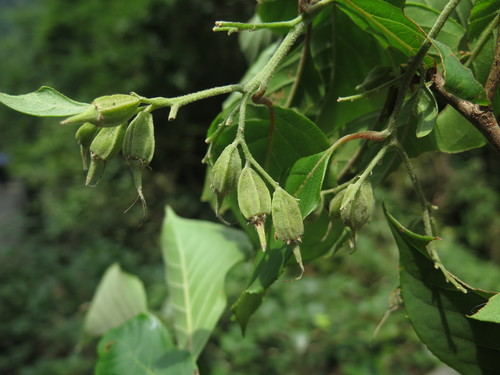
A small tropical and subtropical tree in the Styracaceae family, growing 4-6 m tall and producing small fruit about 9 mm across.
How to Grow
Succeeds in full sun or light shade. Grows best in deep, fertile, moist soils. Newly planted young trees are quite slow to grow away.
Propagation: Seed - it can be stored for less than six months. It does not require pre-treatment, and is best sown as soon as it is ripe. Sow the seed in a lightly shaded position in a nursery seedbed or in individual containers. Germination rates are usually rather low, with the seed sprouting in 20 - 40 days. Pot up seedlings into individual containers when they are 4 - 6cm tall, and they should be ready to plant out 9 - 10 months later.
Other Uses
The stem is a source of an aromatic resin that is used as an incense in religious ceremonies and in the home. The wood is of medium texture, moderately heavy, hard and moderately resistant to wood-eating organisms. It is used in construction, internal works, light cabinet making, boxes, toys etc.
Names & Synonyms
Laranjinha-do-mato
References (2)
- Peres, M. K., 2011, Diasporos do Cerrado Atrativos para Fauna: Chave Interativa Caracterizacao Visual e Relacoes Ecologicas. Masters thesis. Universidade de Brasilia.
- www.colecionandofrutas.org
More from Styracaceae