Comandra umbellata subsp. pallida
A. DC.
Pale bastard toadflax

iNaturalist · cc-by-sa
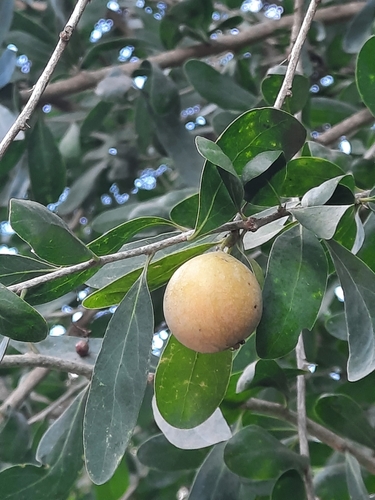
(c) Matt Lavin, some rights reserved (CC BY-SA)
(c) Matt Lavin, some rights reserved (CC BY-SA)

iNaturalist · cc-by-nc
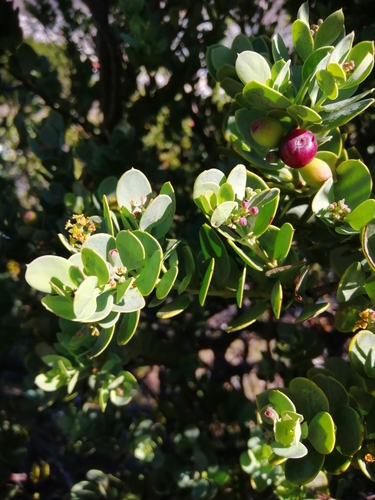
(c) williamdreynolds, some rights reserved (CC BY-NC)
(c) williamdreynolds, some rights reserved (CC BY-NC)

iNaturalist · cc-by-nc-sa
(c) Jackie Grant, some rights reserved (CC BY-NC-SA), uploaded by Jackie Grant
(c) Jackie Grant, some rights reserved (CC BY-NC-SA), uploaded by Jackie Grant
What to Eat
Edible parts: Fruit, Seeds
The fruit and seeds are edible.
Known Hazards
Where to Find It
It is a temperate plant. It grows in dry sandy places. It grows attached to the roots of other plants.
Canada, North America, USA,
Countries: Antigua & Barbuda, Barbados, Bahamas, Belize, Canada, Costa Rica, Cuba, Dominica, Dominican Republic, Grenada, Guatemala, Honduras, Haiti, Jamaica, St Kitts & Nevis, St Lucia, Mexico, Nicaragua, Panama, Puerto Rico, El Salvador, Trinidad & Tobago, United States, St Vincent
How to Identify
A small herb. It grows 15-40 cm high. The leaves are alternate and simple. They are small, pale green and narrow. They are 1.3-2.5 cm long. The flowers are whitish-green. They are small and 5 mm long. They occur in small clusters at the ends of the leafy stems. The fruit are dry, olive green berries.
References (5)
- Beckstrom-Sternberg, Stephen M., and James A. Duke. "The Foodplant Database." http://probe.nalusda.gov:8300/cgi-bin/browse/foodplantdb.(ACEDB version 4.0 - data version July 1994)
- Cormack, R. G. H., 1967, Wild Flowers of Alberta. Commercial Printers Edmonton, Canada. p 70
- Illustrated Flora of Central Texas p 979
- Prodr. 14(2):636. 1857
- Plants for a Future database, The Field, Penpol, Lostwithiel, Cornwall, PL22 0NG, UK. http://www.scs.leeds.ac.uk/pfaf/