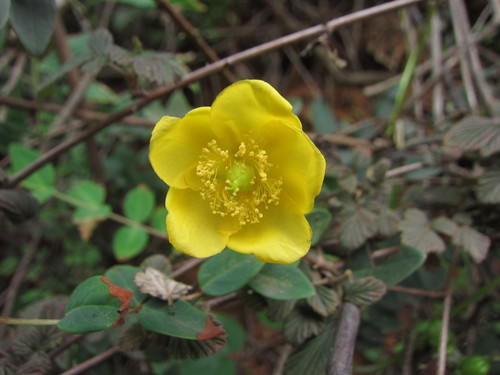
Hypericum uralum
Buch.-Ham. ex D. Don
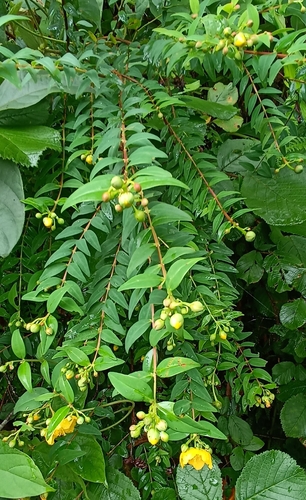
iNaturalist · cc-by-nc
(c) Rajendra Koranga, some rights reserved (CC BY-NC)
(c) Rajendra Koranga, some rights reserved (CC BY-NC)
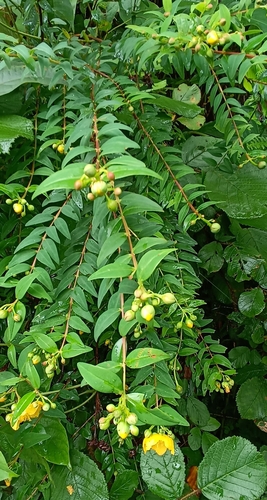
iNaturalist · cc-by-nc
(c) Rajendra Koranga, some rights reserved (CC BY-NC)
(c) Rajendra Koranga, some rights reserved (CC BY-NC)
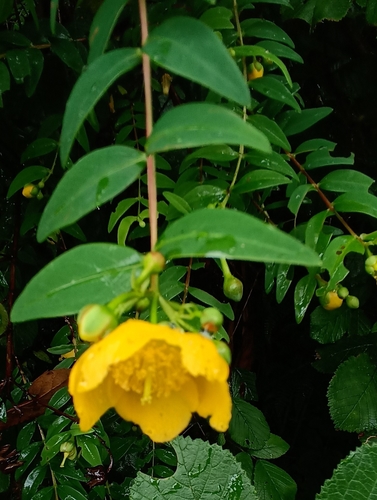
iNaturalist · cc-by-nc
(c) Rajendra Koranga, some rights reserved (CC BY-NC)
(c) Rajendra Koranga, some rights reserved (CC BY-NC)
What to Eat
Edible parts: Leaves - tea
The leaves are fermented and brewed as a tea drink.
Where to Find It
It is a temperate plant.
Asia, India, Northeastern India,
Countries: United Arab Emirates, Afghanistan, Armenia, Azerbaijan, Bangladesh, Bahrain, Brunei, Bhutan, China, Georgia, Indonesia, Israel, India, Iraq, Iran, Jordan, Japan, Kyrgyzstan, Cambodia, North Korea, South Korea, Kuwait, Kazakhstan, Laos, Lebanon, Sri Lanka, Myanmar, Mongolia, Maldives, Malaysia, Nepal, Oman, Philippines, Pakistan, Qatar, Saudi Arabia, Singapore, Syria, Thailand, Tajikistan, Timor-Leste, Turkmenistan, Turkey, Taiwan, Uzbekistan, Vietnam, Yemen
How to Identify
A temperate herb in the Hypericaceae family (also placed in Clusiaceae).
Medicinal Uses
Fermented leaves are traditionally used as a tea drink.
Wikipedia
Source ↗Hypericum uralum is a species of flowering plant in the St. John's wort family Hypericaceae. Its native range includes China, Bhutan, India, Nepal, Pakistan and Myanmar.
Notes
Also put in the family Clusiaceae.
Names & Synonyms
Jasheng
Hypericum nepalense K. Koch [Invalid]Norysca urala (Buch.-Ham. ex D. Don) K. Kochand others
References (1)
- Tsering, J., et al, 2017, Ethnobotanical appraisal on wild edible plants used by the Monpa community of Arunchal Pradesh. Indian Journal of Traditional Knowledge. Vol 16(4), October 2017, pp 626-637