Quercus guyavifolia
H. Lev.
FagaceaeSeeds/Nuts
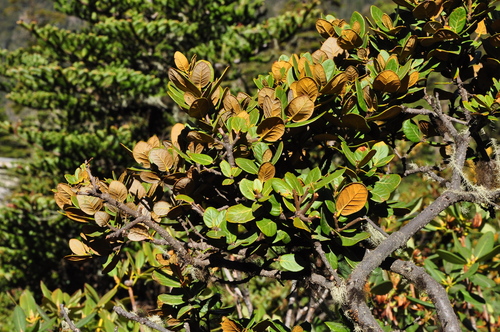
iNaturalist · cc-by-nc-sa
(c) mazus_jan, some rights reserved (CC BY-NC-SA), uploaded by mazus_jan
(c) mazus_jan, some rights reserved (CC BY-NC-SA), uploaded by mazus_jan

iNaturalist · cc-by-nc
(c) 通通, some rights reserved (CC BY-NC)
(c) 通通, some rights reserved (CC BY-NC)

gbif · cc-by-nc
Field Museum of Natural History - Botany Department
Field Museum of Natural History - Botany Department
What to Eat
Edible parts: Nut, Kernel
The kernel is eaten raw and also used for making wine.
Where to Find It
It is a temperate plant.
Asia, China,
Countries: United Arab Emirates, Afghanistan, Armenia, Azerbaijan, Bangladesh, Bahrain, Brunei, Bhutan, China, Georgia, Indonesia, Israel, India, Iraq, Iran, Jordan, Japan, Kyrgyzstan, Cambodia, North Korea, South Korea, Kuwait, Kazakhstan, Laos, Lebanon, Sri Lanka, Myanmar, Mongolia, Maldives, Malaysia, Nepal, Oman, Philippines, Pakistan, Qatar, Saudi Arabia, Singapore, Syria, Thailand, Tajikistan, Timor-Leste, Turkmenistan, Turkey, Taiwan, Uzbekistan, Vietnam, Yemen
How to Identify
A temperate tree in the Fagaceae family.
Wikipedia
Source ↗Quercus guyavifolia is a species of flowering plant in the family Fagaceae, native to south-central China. An evergreen tree reaching 15 m (50 ft), its leaves are golden-brown on their undersides, making it one of the most attractive of the golden oaks. It is placed in section Ilex.
Names & Synonyms
Quercus aquifolioides var. rufescens (Franch.) Rehder & E. H. WilsonQuercus ilex var. rufescens Franch.Quercus pileata Hu & W. C. ChengQuercus semecarpifolia var. rufescens (Franch.) Schottky
References (1)
- Zhang, L., et al, 2016, Ethnobotanical study of traditional edible plants used by the Naxi people during droughts. Journal of Ethnobiology and Ethnomedicine. 12:39
More from Fagaceae

Castanea alnifolia
Bush chinkapin, Florida chinkapin, Trailing chinkapin, Downy chinquapin

Castanea crenata
Japanese chestnut

Castanea dentata
American chestnut, American sweet chestnut

Castanea henryi
Zhui li, Conic chestnut
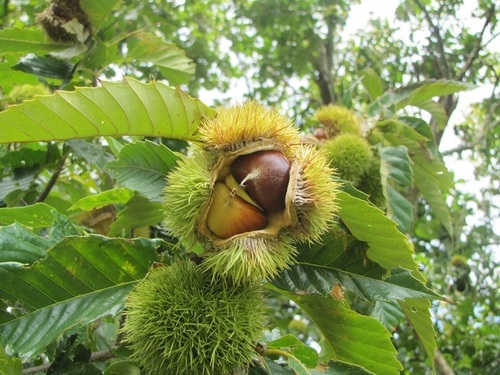
Castanea mollissima
Chinese chestnut

Castanea ozarkensis
Ozark chinkapin, Ozark chestnut