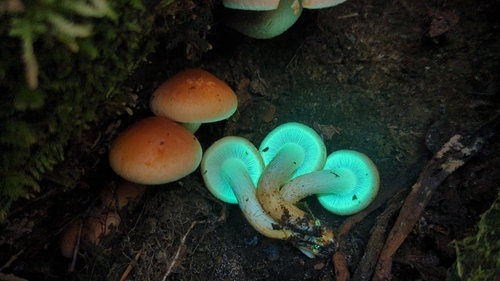
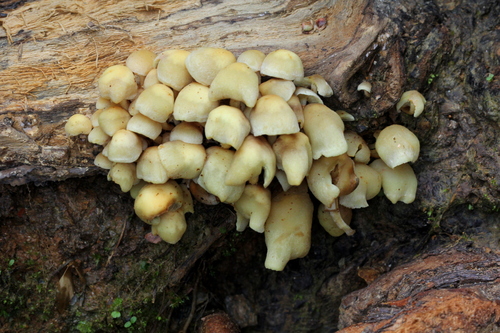
Pholiota adiposa
(Fr.) Quel.
StrophariaceaeMushrooms

iNaturalist · cc-by-nc
(c) Mike Lusk, some rights reserved (CC BY-NC), uploaded by Mike Lusk
(c) Mike Lusk, some rights reserved (CC BY-NC), uploaded by Mike Lusk

iNaturalist · cc-by-nc
(c) Christian Schwarz, some rights reserved (CC BY-NC), uploaded by Christian Schwarz
(c) Christian Schwarz, some rights reserved (CC BY-NC), uploaded by Christian Schwarz

iNaturalist · cc-by-nc-sa
(c) noah_siegel, some rights reserved (CC BY-NC-SA), uploaded by noah_siegel
(c) noah_siegel, some rights reserved (CC BY-NC-SA), uploaded by noah_siegel
What to Eat
Edible parts: Mushroom, Fungus
The mushroom is eaten.
Where to Find It
It is a temperate plant.
Asia, China,
Countries: United Arab Emirates, Afghanistan, Armenia, Azerbaijan, Bangladesh, Bahrain, Brunei, Bhutan, China, Georgia, Indonesia, Israel, India, Iraq, Iran, Jordan, Japan, Kyrgyzstan, Cambodia, North Korea, South Korea, Kuwait, Kazakhstan, Laos, Lebanon, Sri Lanka, Myanmar, Mongolia, Maldives, Malaysia, Nepal, Oman, Philippines, Pakistan, Qatar, Saudi Arabia, Singapore, Syria, Thailand, Tajikistan, Timor-Leste, Turkmenistan, Turkey, Taiwan, Uzbekistan, Vietnam, Yemen
How to Identify
A slimy, scaly yellow-brown mushroom found in temperate regions of North America and Eurasia. It grows parasitically or saprotrophically on beech species in bunches, with caps up to 9.5 centimetres wide and dark concentrically arranged scales.
Medicinal Uses
Several compounds produced by this mushroom, such as methyl gallate, are of interest for their medicinal properties.
References (1)
- Fan, L., et al, The Use of Edible Wild Plants and Fungi in Korean-Chinese Villages. Journal of Environmental Information Science 44-5 p 71-79