Monoon fuscum
(King) B. Xue & R. M. K. Saunders
AnnonaceaeFruit
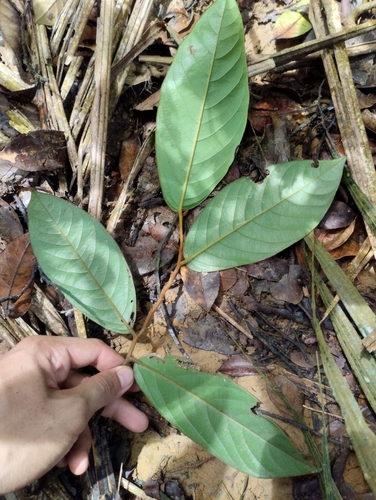
iNaturalist · cc-by-nc
(c) Akmal Idham, some rights reserved (CC BY-NC), uploaded by Akmal Idham
(c) Akmal Idham, some rights reserved (CC BY-NC), uploaded by Akmal Idham
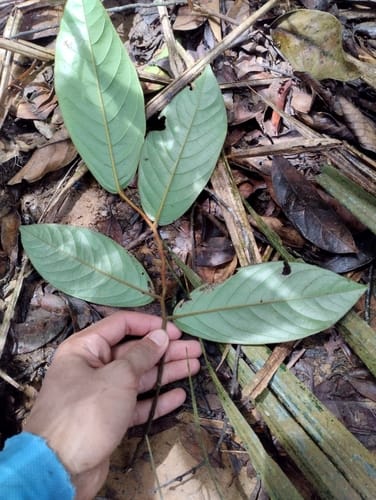
iNaturalist · cc-by-nc
(c) Akmal Idham, some rights reserved (CC BY-NC)
(c) Akmal Idham, some rights reserved (CC BY-NC)
What to Eat
Edible parts: Fruit
The fruit is eaten fresh or cooked.
Where to Find It
It is a subtropical plant. It grows in lowland forest.
Asia, Himalayas, India, Indonesia, Malaysia, SE Asia, Thailand,
Countries: United Arab Emirates, Afghanistan, Armenia, Azerbaijan, Bangladesh, Bahrain, Brunei, Bhutan, China, Georgia, Indonesia, Israel, India, Iraq, Iran, Jordan, Japan, Kyrgyzstan, Cambodia, North Korea, South Korea, Kuwait, Kazakhstan, Laos, Lebanon, Sri Lanka, Myanmar, Mongolia, Maldives, Malaysia, Nepal, Oman, Philippines, Pakistan, Qatar, Saudi Arabia, Singapore, Syria, Thailand, Tajikistan, Timor-Leste, Turkmenistan, Turkey, Taiwan, Uzbekistan, Vietnam, Yemen
How to Identify
A tree. The leaves are simple and alternate. They are 15 cm long by 6 cm wide. The flowers are on the stem. They are in small bundles with several flowers. The flowers are white to yellow. The fruit is brownish and each section has several seeds.
Names & Synonyms
Mempisang, Tok schein
Enicosanthum fuscum (King) Airy ShawGriffithia fusca KingGriffithianthus fuscus (King) Merr.
References (3)
- Murtem, G. & Chaudhrey, P., 2016, An ethnobotanical note on wild edible plants of Upper Eastern Himalaya, India. Brazilian Journal of Biological Sciences, 2016, v. 3, no. 5, p. 63-81. (As Griffithia fusca)
- Slik, asianplant.net (As Enicosanthum fuscum)
- Turner, I. M. & Utteridge, T. M. A., 2016, Whither Polyalthia (Annonaceae) in Peninsular Malaysia? Synopses of Huberantha, Maasia, Monoon and Polyalthia s.s.. European Journal of Taxonomy 183: 1–26


