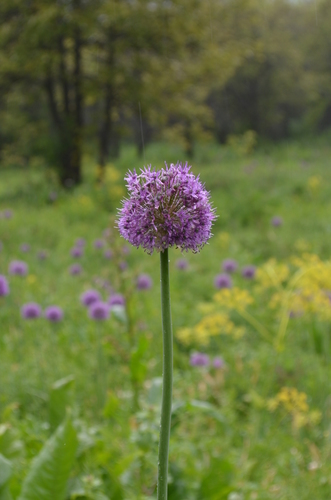
Allium lusitanicum
Lam.
AmaryllidaceaeLeaves
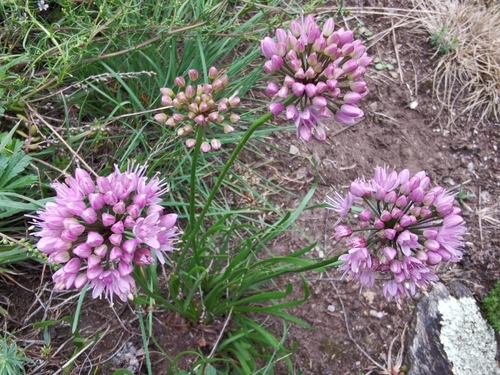
iNaturalist · cc-by-nc
(c) Andreas Berger, some rights reserved (CC BY-NC), uploaded by Andreas Berger
(c) Andreas Berger, some rights reserved (CC BY-NC), uploaded by Andreas Berger
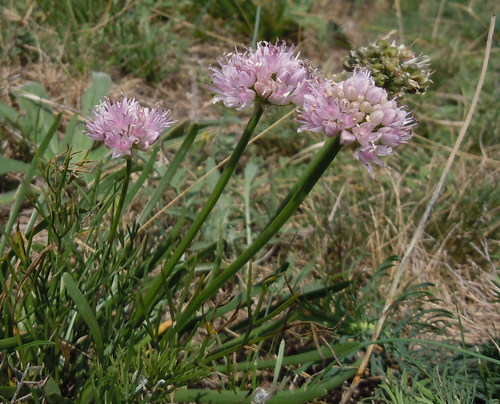
iNaturalist · cc-by-nc
(c) cpu, some rights reserved (CC BY-NC), uploaded by cpu
(c) cpu, some rights reserved (CC BY-NC), uploaded by cpu

iNaturalist · cc-by
(c) Pavel Kacl, some rights reserved (CC BY), uploaded by Pavel Kacl
(c) Pavel Kacl, some rights reserved (CC BY), uploaded by Pavel Kacl
What to Eat
Edible parts: Vegetable
Used as a vegetable.
Where to Find It
It is a temperate plant.
Europe,
Countries: Andorra, Albania, Austria, Bosnia & Herzegovina, Belgium, Bulgaria, Belarus, Switzerland, Cyprus, Czechia, Germany, Denmark, Estonia, Spain, Finland, France, United Kingdom, Greece, Croatia, Hungary, Ireland, Iceland, Italy, Liechtenstein, Lithuania, Luxembourg, Latvia, Monaco, Moldova, Montenegro, North Macedonia, Malta, Netherlands, Norway, Poland, Portugal, Romania, Serbia, Russia, Sweden, Slovenia, Slovakia, San Marino, Ukraine
How to Identify
An onion plant in the Amaryllidaceae family found in temperate regions.
Wikipedia
Source ↗Allium lusitanicum is a plant species widespread over much of Europe, mostly in mountainous regions. It has been reported from every country on the continent from Portugal to Ukraine except Iceland, Ireland, the United Kingdom, Netherlands, Belgium, Luxembourg, Denmark, Finland, Albania and Greece. Allium lusitanicumm is a bulb-forming perennial with thread-like leaves shorter than the stipes. Stipes are up to 20 cm tall. Tepals, anthers and styles are all a uniform shade of rose-violet.
Names & Synonyms
Allium senescens subsp. montanum (Pohl) Holuband others
References (1)
- Hammer, K. & Spahillari, M., 1999, Crops of European origin. in Report of a networking group on minor crops. IPGRI p 41 (As Allium senescens subsp. montanum)