Annona foetida
Mart.
Foetid annona

(c) gabrielreis_, some rights reserved (CC BY-NC)
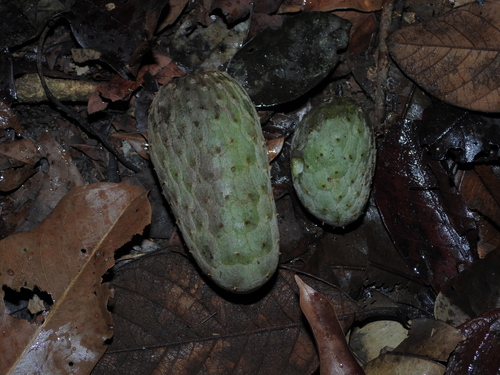
(c) Sébastien SANT, some rights reserved (CC BY-NC)
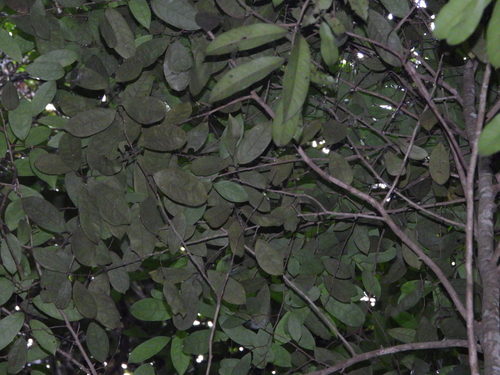
(c) Sébastien SANT, some rights reserved (CC BY-NC)
What to Eat
Edible parts: Fruit
Bioactive compounds extracted from leaves, bark and branches have been reported to have antimicrobial, antileishmanial and antitrypanosomal activities.
Where to Find It
It is a tropical plant. It grows in the lowland rainforest. It has been recorded between 260-350 m above sea level.
Amazon, Bolivia*, Brazil, Colombia, Ecuador, French Guiana, Peru, South America, Suriname, Venezuela,
How to Identify
A tree. It grows 3-11 m tall. The trunk is 4-8 cm across. The leaves are shiny green on top and dull green underneath. Flowers and buds are on older branches. They are pale green.
Medicinal Uses
The leaves and bark, used externally, are antirheumatic. A decoction of the leaves and bark is useful in the treatment of intermittent fevers. The green, nripe fruits exhale a foul odour and are used in the healing of atonic ulcers.
Wikipedia
Source ↗Annona foetida is a species of plant in the family Annonaceae. It is native to Bolivia, Brazil, Colombia, French Guiana, Peru and Suriname. Carl Friedrich Philipp von Martius, the German botanist who first formally described the species, named it after its foul-smelling (fetidus in Latin) odor.
Notes
The leaves and bark have medicinal benefits.
Names & Synonyms
Araticum caatinga, Envira ata, Envireira, Graviola da mata, Mereku wenawasa
References (5)
- Costa, E. V., 2011, Trypanocidal Activity of Oxoaporphine and Pyrimidine-β- Carboline Alkaloids from the Branches of Annona foetida Mart. (Annonaceae). Molecules 2011, 16, 9714-9720
- Grandtner, M. M. & Chevrette, J., 2013, Dictionary of Trees, Volume 2: South America: Nomenclature, Taxonomy and Ecology. Academic Press p 37
- Kew Plants of the World onLine
- Philips, O., 1992, The potential for harvesting fruits in tropical rainforests: new data from Amazonian Peru. Biodiversity and Conservation 2, 18-38
- Roa, J. A. G. & Boada, D. S. G., 2018, Fundación para el Fortalecimiento de la Fruticultura y Plantas Alimenticias no Convencionales en Colombia.


