Shorea atrinervosa
Symington

President and Fellows of Harvard College

President and Fellows of Harvard College

President and Fellows of Harvard College
What to Eat
Edible parts: Nut - oil
The nuts are processed for oil.
Where to Find It
It is a tropical plant.
Asia, Indonesia, Malaysia, SE Asia,
How to Identify
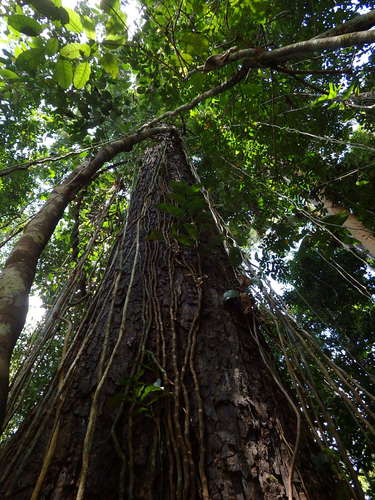
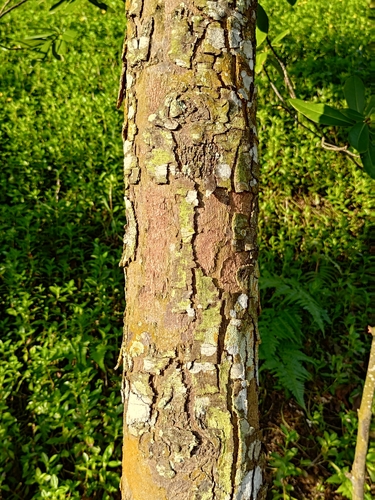
A tropical tree in the Dipterocarpaceae family bearing small nuts approximately 2.5 cm long by 1.5 cm wide.
Wikipedia
Source ↗Shorea atrinervosa is a species of plant in the family Dipterocarpaceae. The species name is derived from Latin (ater = dull black and nervosus = nerved) and refers to leaf venation which is black in herbarium specimens. It is an emergent tree, up to 50 metres (160 ft), found in mixed dipterocarp forest on clay-rich soils. S. atrinervosa is found in Peninsular Malaysia, Sumatra and Borneo. It is found in at least four protected areas (Ulu Telupid and Bidu Bidu Forest Reserves and Lambir and Gunung Mulu National Parks).
Production
It produces high yields of nuts each year.
Names & Synonyms
Engabang tukel
References (1)
- Coolen, Q. T., 2013, The Illipe nut (Shorea spp.) as additional resource in plantation forestry. Van Hall Larenstein University and Sarawak Forestry.